
SPCX Stock Price Target of $800: What Would It Actually Take to Get There?

 Prefer us on Google
SPCX stock price at $800 is not a number that any other major analyst has published. SPCX stock price at $137 today is approximately 480% below the Raymond James target, making it the largest gap between current price and analyst target of any major US listed technology company. SPCX stock price reaching $800 requires a specific sequence of business deliveries across multiple revenue segments over multiple years, and mapping what that sequence actually looks like is more useful than either dismissing the target as fantasy or accepting it as inevitable.
Raymond James cited launch dominance and falling launch costs as the specific drivers behind the $800 target. Those two factors are the starting point for understanding the path, but the full picture of what $800 requires extends considerably further than launch economics alone.
What $800 Implies About SpaceX's Value
At $800 per share, SPCX stock price implies a market capitalization of approximately $6 trillion. That figure is larger than any company in the history of public markets has sustained and significantly larger than Apple's current market capitalization of approximately $4.6 trillion.
Reaching $6 trillion requires SpaceX to deliver earnings at a scale that makes $6 trillion a reasonable multiple to pay. The specific earnings level that would justify $6 trillion depends on what multiple the market assigns, which in turn depends on the growth rate and quality of those earnings. A company growing at 30% annually with high-margin recurring revenue deserves a higher multiple than a mature company growing at 5%. SpaceX's revenue trajectory through 2030 will determine which multiple framework applies.
The most optimistic analysts including Raymond James are essentially arguing that SpaceX becomes the defining infrastructure company of the 2030s in the same way that Amazon became the defining infrastructure company of the 2010s through AWS. Amazon's market capitalization during its most aggressive AWS growth phase sustained multiples that would have seemed absurd when viewed through the lens of its retail earnings alone. The $800 SPCX stock price target embeds a similar bet.
The Starlink Revenue Engine That Makes $800 Conceivable
The most concrete path to $800 runs through Starlink, and understanding the specific economics of how Starlink scales is the foundation of any serious attempt to model SPCX stock price at that level.
Starlink currently serves approaching 10 million subscribers across consumer, enterprise, maritime, aviation, and government segments at price points ranging from approximately $120 per month for residential service to substantially higher for enterprise and government contracts. The recurring nature of subscription revenue, the near zero marginal cost of adding a new subscriber once the satellite constellation is in orbit, and the total addressable market of the approximately 3.5 billion people who currently lack adequate broadband access create a revenue growth profile that compounds powerfully over years.
If Starlink reaches 50 million subscribers by 2030 at a blended average revenue per user across its various tiers, the Starlink business alone generates annual revenue that the software and recurring revenue multiples the market applies to subscription businesses would value at a significant portion of the $6 trillion that $800 per share implies.
The satellite constellation that makes this possible is already substantially built. The marginal cost of adding a subscriber is primarily the cost of a terminal and the cost of customer acquisition, both of which decline with scale. Each new subscriber after the constellation reaches its planned density is incremental high-margin revenue on a largely fixed infrastructure base. That margin structure is what makes the Starlink growth trajectory so compelling for the $800 prediction.
The aviation and maritime segments add pricing power that residential numbers understate. Airlines and shipping companies pay substantially more than residential subscribers for connectivity that their operations require. As Starlink expands its aviation and maritime coverage and as the performance advantages over legacy satellite services compound, these higher-margin segments could represent a meaningful share of total Starlink revenue without requiring anywhere near the same subscriber count as the residential business.
The Launch Business Case Raymond James Actually Made
The specific rationale Raymond James cited, launch dominance and falling launch costs, deserves precise examination because it is the component of the $800 thesis that is most grounded in current observable facts rather than future projections.
SpaceX conducts more orbital launches annually than any other launch provider on Earth, including national space programs. The Falcon 9 reusability record, with individual boosters completing more than 25 flights each, has driven SpaceX's cost per kilogram to orbit to levels that competitors cannot match and that have permanently altered the economics of access to space.
Starship extends this cost advantage to a dramatically larger scale. When Starship achieves full and rapid reusability, the cost per kilogram to orbit is projected to fall by another order of magnitude from Falcon 9's already low levels. At those economics, applications that are currently uneconomical become viable, and SpaceX's position as the lowest cost provider becomes a structural competitive advantage that is difficult for competitors to challenge.
The launch market itself is expanding rapidly. Every major AI infrastructure company, every government space agency, every commercial satellite operator, and every future orbital data center needs launch services. SpaceX's vertical integration, its rapid reuse cadence, and its cost leadership position it to capture a substantial share of a market that is growing faster than at any previous point in history.
Raymond James's $800 target is essentially an argument that the combination of launch market growth and SpaceX's cost leadership compounds into revenue and earnings at a scale that the $6 trillion valuation eventually represents fair value for.
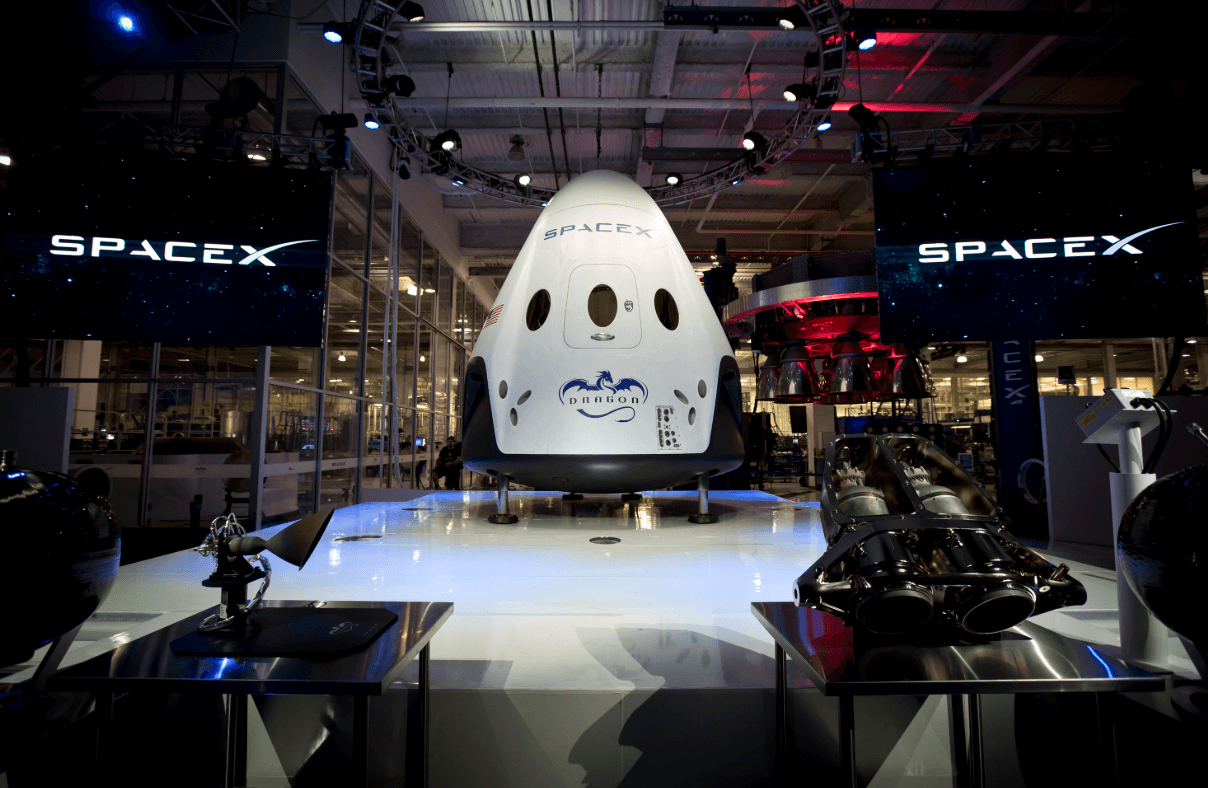
The Orbital Data Center Wildcard
The component of SPCX stock price potential that has the widest range of analyst opinions and the most uncertain timeline is the orbital data center concept that Elon Musk has described as a transformative opportunity.
The premise is that computing infrastructure deployed in low Earth orbit aboard Starship vehicles can serve AI inference workloads for the entire planet simultaneously, without the geographic limitations, regulatory constraints, and physical vulnerability that terrestrial data centers face. A single orbital data center cluster in LEO passes over every point on Earth multiple times per day, providing global coverage without the latency penalty of geostationary orbit.
For this to contribute meaningfully to SPCX stock price at $800, several conditions must hold simultaneously. Starship must achieve the rapid reusability cadence that makes frequent heavy payload launches economical. The latency of LEO based compute must be acceptable for the AI workloads targeted. Enterprise customers must develop sufficient trust in space-based infrastructure reliability to commit meaningful workloads. And the regulatory framework for operating commercial computing infrastructure in space must evolve to accommodate a new category of infrastructure.
None of these conditions are impossible. Several are likely given enough time and demonstrated performance. The specific timeline uncertainty is what creates the wide range between the $200 to $239 targets from Citi and Bernstein and the $800 target from Raymond James. The conservative analysts are pricing orbital data centers as a potential but distant and uncertain contribution. Raymond James appears to be pricing them as a probable and significant contribution on a timeline that justifies the current investment.
The AI Segment Contribution That Is Already Visible
Unlike orbital data centers, SpaceX's AI segment revenue from the Anthropic and Google contracts is already generating revenue in the current quarter and will be reported for the first time in the August 6 earnings call.
The Anthropic contract, structured as a 180 day lease with mutual 90 day cancellation terms, generates approximately $1.25 billion per month at the disclosed rate. The Google contract generates approximately $920 million per month. Together they represent over $25 billion in annual run-rate revenue if both contracts are renewed beyond their initial terms.
The structure of these contracts is what prevents the straightforward multiplication of monthly rates into multi-year revenue certainty. The cancellation provisions mean the $45 billion total Anthropic contract value cited in media coverage represents a maximum scenario. The Google contract's September 30 GPU delivery deadline creates a specific near-term binary event that either confirms or disrupts the AI revenue trajectory.
For SPCX stock price to reach $800, these contracts need to be the beginning of a multi customer AI compute business rather than a concentrated two customer arrangement. The August 6 earnings call will be the first opportunity for management to speak publicly about the pipeline of additional AI compute customers beyond Anthropic and Google, and that pipeline disclosure is arguably the most important single data point for investors trying to model the AI segment's contribution to the $800 target.
The Timeline That $800 Actually Requires
The $800 price target, like all analyst price targets, is typically expressed as a twelve month target. Raymond James expressing an $800 target while SPCX stock price trades at $137 is almost certainly not a prediction that SPCX will reach $800 in twelve months. It is a statement about terminal value, the price the stock should reach when the business matures to the point where its current investment phase is complete and its revenue streams are fully visible.
The realistic timeline for SPCX stock price to reach $800 involves a specific sequence. Starlink reaching 50 million subscribers, likely in the 2028 to 2030 timeframe at current growth rates. Starship achieving commercial certification and rapid reusability, likely in the 2027 to 2028 timeframe following the FAA investigation closure today. AI compute contracts expanding beyond Anthropic and Google to multiple enterprise customers. Orbital data center deployment beginning, likely not before 2029 to 2030.
If all four of those milestones deliver on the optimistic timeline, the earnings trajectory that justifies $800 becomes visible in reported financials by 2029 to 2030. The stock price would begin discounting that trajectory ahead of the reported earnings, meaning the actual move toward $800 likely begins in the 2027 to 2028 timeframe as Starship milestones validate the launch economics thesis and Starlink subscriber numbers validate the recurring revenue model.
What Could Prevent SPCX Stock Price From Reaching $800
Honest treatment of the $800 target requires mapping the specific scenarios where it does not materialize rather than simply noting that risk exists.
Starship's development timeline could extend significantly beyond current estimates. The history of aerospace development programs is filled with timelines that proved optimistic by years. If Starship requires three additional years beyond the current planning timeline to achieve commercial certification and rapid reusability, every downstream revenue opportunity that depends on it shifts accordingly.
Competition in launch services could intensify from directions that are not currently visible in the market. Blue Origin's New Glenn, United Launch Alliance's Vulcan, and potential new entrants funded by the extraordinary capital that space technology has attracted could erode SpaceX's cost leadership position faster than the $800 thesis assumes.
The AI compute contracts could fail to renew or expand. If Anthropic exercises its 90-day cancellation option and Google triggers its termination clause due to GPU delivery shortfall, the AI segment contribution to SpaceX's revenue trajectory changes dramatically and every model built on those contract assumptions requires revision.
Regulatory evolution in ways that constrain SpaceX's operations across multiple fronts simultaneously could compress the timeline available for the business to reach the scale that $800 implies. Government customers that represent a meaningful portion of SpaceX's launch revenue could face political constraints on their relationships with Elon Musk's companies.
For those looking to participate in global financial markets, having access to the right trading platform matters. WEEX offers crypto and stock trading products, covering major global markets including US stocks and digital assets.
Conclusion
SPCX stock price reaching $800 requires SpaceX to become the most valuable company in the history of public markets at approximately $6 trillion. That destination is not impossible. It is the outcome when Starlink achieves 50 million plus subscribers at subscription business margins, when Starship's commercial certification enables the launch economics thesis Raymond James built its target around, when the AI compute business expands from its current two customer foundation to a multi-enterprise platform, and when orbital data centers begin demonstrating the transformative revenue potential that the most optimistic analysts have been pricing.
The FAA investigation closure today makes the Starship component of that sequence more achievable on a faster timeline than existed yesterday. The August 6 earnings call will determine whether the AI compute component is on the trajectory the contracts imply. Starlink's subscriber growth will continue compounding toward the scale that the subscription model's margin structure eventually makes extraordinary.
SPCX stock price at $137 today is either a dramatically undervalued entry point into the world's most valuable company in waiting, or it is a reasonable price for a business that will need many years of flawless execution to justify the $6 trillion that $800 per share implies. Raymond James says the former. The current price says the market is not yet convinced.
FAQ
1. Why did Raymond James set an $800 price target for SPCX stock price?
Raymond James cited SpaceX's launch market dominance and the structural decline in launch costs driven by Falcon 9 reusability and the expected commercialization of Starship. The firm argues that SpaceX's position as the lowest cost and highest cadence launch provider compounds into a revenue and earnings trajectory that justifies a valuation significantly above the current market capitalization.
2. What market capitalization does $800 SPCX stock price imply?
At $800 per share, SPCX stock price implies a market capitalization of approximately $6 trillion, which would make SpaceX the most valuable company in the history of public markets, larger than Apple, Microsoft, and Nvidia at their respective peaks.
3. What is the realistic timeline for SPCX stock price to reach $800?
The earnings trajectory that would justify $800 likely requires Starlink reaching 50 million subscribers, Starship achieving commercial certification and rapid reusability, AI compute contracts expanding to multiple enterprise customers, and potentially orbital data center deployment beginning. These milestones on optimistic timelines suggest the trajectory toward $800 becomes visible in reported financials in the 2028 to 2030 timeframe.
4. What other analysts have targets for SPCX stock price?
Bernstein maintains an Outperform rating with a $239 target. BofA has a $235 target. Citi initiated coverage with a $200 target. The average analyst target is approximately $242. Raymond James's $800 is the highest published target and is significantly above the next highest target.
5. What is the biggest risk to SPCX stock price reaching $800?
Starship's development timeline extending significantly beyond current estimates is the primary risk because so many of the downstream revenue opportunities that justify $800 depend on Starship achieving commercial certification and rapid reusability on the timeline current models assume. AI compute contract non-renewal and Starlink subscriber growth falling short of the scale the thesis requires are the secondary risks.
Disclaimer: This content is provided for general branding and informational purposes only and doesn't constitute financial, investment, legal, or tax advice. Any events, rewards, online events, or related information mentioned herein should not be considered a recommendation, solicitation, or invitation to purchase, sell, trade, or otherwise deal in any crypto assets or to use any services. Crypto assets are highly volatile and may result in loss. WEEX services and online events may not be available in all regions and are subject to applicable laws, regulations, and eligibility requirements. You are responsible for ensuring that your use of WEEX services complies with local laws and for carefully assessing the risks before participating in any crypto-related activities.
You may also like

SpaceX Stock (SPCX): Price, Outlook and How to Buy
Tangem vs Ledger: Which Hardware Wallet Is Better
Choosing between Tangem and Ledger comes down to how you want to hold keys: a tap-to-sign card with…
Tangem Card Setup: What to Do Since There’s No Seed Phrase
If you’re used to wallets that make you handwrite a seed phrase, Tangem feels different. There’s no seed…
How Does Tangem’s Card-Based Wallet Work? A Complete Beginner’s Guide
This guide explains how a tangem card wallet generates and stores private keys inside a secure chip, how…
What Is Tangem Wallet? A Complete Beginner’s Guide
Tangem is a hardware wallet shaped like a bank card. You tap it on your phone to approve…
Is SafePal Safe? A Look at Its Security Features
SafePal combines an air‑gapped hardware wallet with a mobile app, promising offline key storage and QR‑code transaction signing.…
Micron Stock vs SK Hynix Stock: Which AI Memory Giant Is the Better Buy After SKHY's Nasdaq Debut?
Micron stock is trading down roughly 27% from its all time high. SK Hynix stock through SKHY is trading up 13% from IPO price. This guide compares them directly on the dimensions that matter for the buy decision now that SKHY gives US investors direct access to both names for the first time.

Micron Stock and the $250 Billion US Investment Plan: What It Means for MU Investors
Micron announced a commitment to invest $250 billion in US-based memory manufacturing and research by 2035. This guide examines what the $250 billion plan actually means for the business, the stock, and the investment case.

MU Stock Tests $900 Again: Is This the Buying Opportunity or the Beginning of a Bigger Drop?
MU stock fell roughly 5.76% on July 14, testing the $900 support level for the second time in recent weeks. This guide examines whether $900 is a floor or a level the market is willing to break through.

MSFT Stock vs GOOGL Stock: Which Cloud Giant Is the Better Buy Right Now?
MSFT stock is down 18% year to date trading near $390. GOOGL stock has pulled back roughly 12% from its all time high trading near $358. Both face the same capex anxiety story. This guide compares them directly on the dimensions that matter for the buy decision rather than on company history.

Microsoft Is Replacing OpenAI With Its Own AI Models: What MAI Means for MSFT Stock
Bloomberg reported that Microsoft is replacing some OpenAI software with its own in house AI models called MAI. MSFT stock is already down 18% year to date. This development changes the market's most persistent concern about Microsoft in a specific and positive direction.
MSFT Stock Is Down 18% in 2026: Buy, Hold or Sell Before July 29 Earnings?
MSFT stock is down roughly 18% year to date, trading around $390 against a 52 week high of $555. This guide focuses on whether the 18% decline and the approaching earnings create a buy, hold, or sell setup rather than a generic investment overview.
SPCX Stock Before August 6 Earnings: What Investors Should Watch
SPCX stock reports its first earnings as a public company on August 6, the same day approximately 20% of insider shares become eligible for sale.This guide focuses on the specific metrics that will actually move SPCX stock on August 6, not on what has already been discussed.
SPCX Stock Jumps After FAA Closes Starship Investigation: What It Means for SpaceX
The FAA formally closed its investigation into SpaceX's Starship booster return on July 14, removing one of the most cited regulatory overhangs on SPCX stock since the IPO. This guide examines what the FAA investigation actually was, why it mattered, and what its closure changes for SpaceX and SPCX investors.

SPCX Stock Is Approaching Its $135 IPO Price: Is This the Best Entry Point?
SPCX stock fell to approximately $137 on July 14, its lowest point since the June 12 IPO at $135. The FAA closed its Starship investigation today, Raymond James set an $800 price target, and Grok 4.5 beat GPT 5.5 in professional benchmarks. This guide examines whether that combination creates the entry point the bull case has been waiting for.
SOXL Stock Explained: How the 3X Semiconductor ETF Really Works
SOXL stock is the Direxion 3X semiconductor ETF. Learn how its daily leverage works, why it decays over time, and who should actually trade it.
SpaceX Stock Today: Live Price, IPO Fallout, and How to Trade It
SpaceX stock today trades near its $135 IPO price after peaking above $225. See the live SPCX picture, analyst targets, and how to trade it.
VEEE Stock: Why Twin Vee Soared on the USFM Merger
VEEE stock spiked after Twin Vee's USFM reverse merger. Here's what shareholders get, the CVR trust, price outlook, and the real risks.
SNDK Stock Today: Price, Rally Drivers, and What to Watch
SNDK stock today trades near $1,700–$1,760 as SanDisk stays 2026's top S&P 500 gainer. See the price, AI-memory drivers, analyst targets, and risks.
How to Buy GDWR Safely: Verify Before You Swap
How to buy GDWR (Global Digital Water Reserve) on Solana — verify the real contract, avoid clones, and size a high-risk position safely.

Introducing Cash Cat ($CASHCAT): Robinhood Chain Meme Token and Price Prediction
Cash Cat is a Robinhood Chain meme token drawing attention after a fast market debut, a 1B supply, and sharp price swings.
LLY Stock Forecast: Can AI and Weight Loss Drugs Drive More Growth?
This article maps how Eli Lilly’s GLP-1 weight-loss franchise and AI-driven R&D could influence LLY’s traditional equity and…

CASHCAT Airdrop: How to Earn Up to 50,000 USDT in Rewards on WEEX
This guide breaks down how the CASHCAT Airdrop works on WEEX, the rewards on the table, and a…
What Is SOXS ETF? The 3X Bear Semiconductor ETF Explained
This guide breaks down SOXS—the Direxion Daily Semiconductor Bear 3X Shares—so you understand what a 3x inverse semiconductor…

Trust Wallet Transaction Stuck or Failed? Here's How to Fix It
A stuck or failed transaction in Trust Wallet is one of the most common problems crypto users encounter and one of the most misunderstood. The cause is almost always related to gas fees or network congestion rather than anything wrong with your wallet. This guide explains why transactions get stuck or fail, how to fix each situation, and how to prevent it from happening again.
Trust Wallet vs MetaMask: Which One Is Better for Beginners?
Trust Wallet and MetaMask are the two most widely used self-custody crypto wallets in the world. They serve different primary purposes and suit different types of crypto users. This guide compares them directly on the dimensions that matter most for beginners making their first wallet choice.

Trust Wallet Seed Phrase: How to Store It Safely and What Never to Do
Your Trust Wallet seed phrase is the single most important piece of information associated with your crypto holdings. Every security measure in the world is irrelevant if your seed phrase is compromised. This guide focuses entirely on storage methods, the specific mistakes that lead to loss, and the habits that protect your seed phrase over the long term.
O Airdrop for New Users: Earn USDT Rewards on WEEX
New to trading O and looking for USDT rewards? This guide explains how the WEEX O Airdrop for…
How to Install Trust Wallet Safely: What Most Guides Leave Out
Most Trust Wallet installation guides tell you where to download the app and how to save your recovery phrase. Few explain the specific mistakes that result in lost funds, compromised wallets, and successful phishing attacks during the setup process. This guide focuses on what those other guides skip.
Samsung Stock vs SK Hynix Stock: Which Korean Memory Giant Is the Better Buy Right Now?
Samsung stock and SK Hynix stock are the two largest memory companies in the world and the two dominant forces in the AI memory boom of 2026. This guide compares the two specifically on the variables that matter for the buy decision rather than on company history or general descriptions.
SpaceX Stock (SPCX): Price, Outlook and How to Buy
Tangem vs Ledger: Which Hardware Wallet Is Better
Choosing between Tangem and Ledger comes down to how you want to hold keys: a tap-to-sign card with…
Tangem Card Setup: What to Do Since There’s No Seed Phrase
If you’re used to wallets that make you handwrite a seed phrase, Tangem feels different. There’s no seed…
How Does Tangem’s Card-Based Wallet Work? A Complete Beginner’s Guide
This guide explains how a tangem card wallet generates and stores private keys inside a secure chip, how…
What Is Tangem Wallet? A Complete Beginner’s Guide
Tangem is a hardware wallet shaped like a bank card. You tap it on your phone to approve…
Is SafePal Safe? A Look at Its Security Features
SafePal combines an air‑gapped hardware wallet with a mobile app, promising offline key storage and QR‑code transaction signing.…