
Micron Stock vs SK Hynix Stock: Which AI Memory Giant Is the Better Buy After SKHY's Nasdaq Debut?

 Prefer us on Google



Micron stock and SK Hynix stock through SKHY are now the two most direct ways for US investors to own the AI memory trade, and for the first time since SK Hynix's Nasdaq listing on July 10, the comparison can be made between two US accessible securities rather than between a Nasdaq-listed US company and a Korean exchange-listed foreign company.
Micron stock at $920 represents a company that crossed the $1 trillion market capitalization threshold on May 26 and has since pulled back roughly 27% from its all time high on supply normalization concerns. SKHY at $168 represents a company that listed four days ago at $149 and has not yet experienced a meaningful earnings cycle as a US-listed security. The comparison between them is not between two mature securities with equivalent price discovery histories. It is between an established US-listed memory company with years of analyst coverage and a newly accessible foreign company whose US listing has just begun to attract the institutional accumulation that will eventually close its valuation gap with American peers.
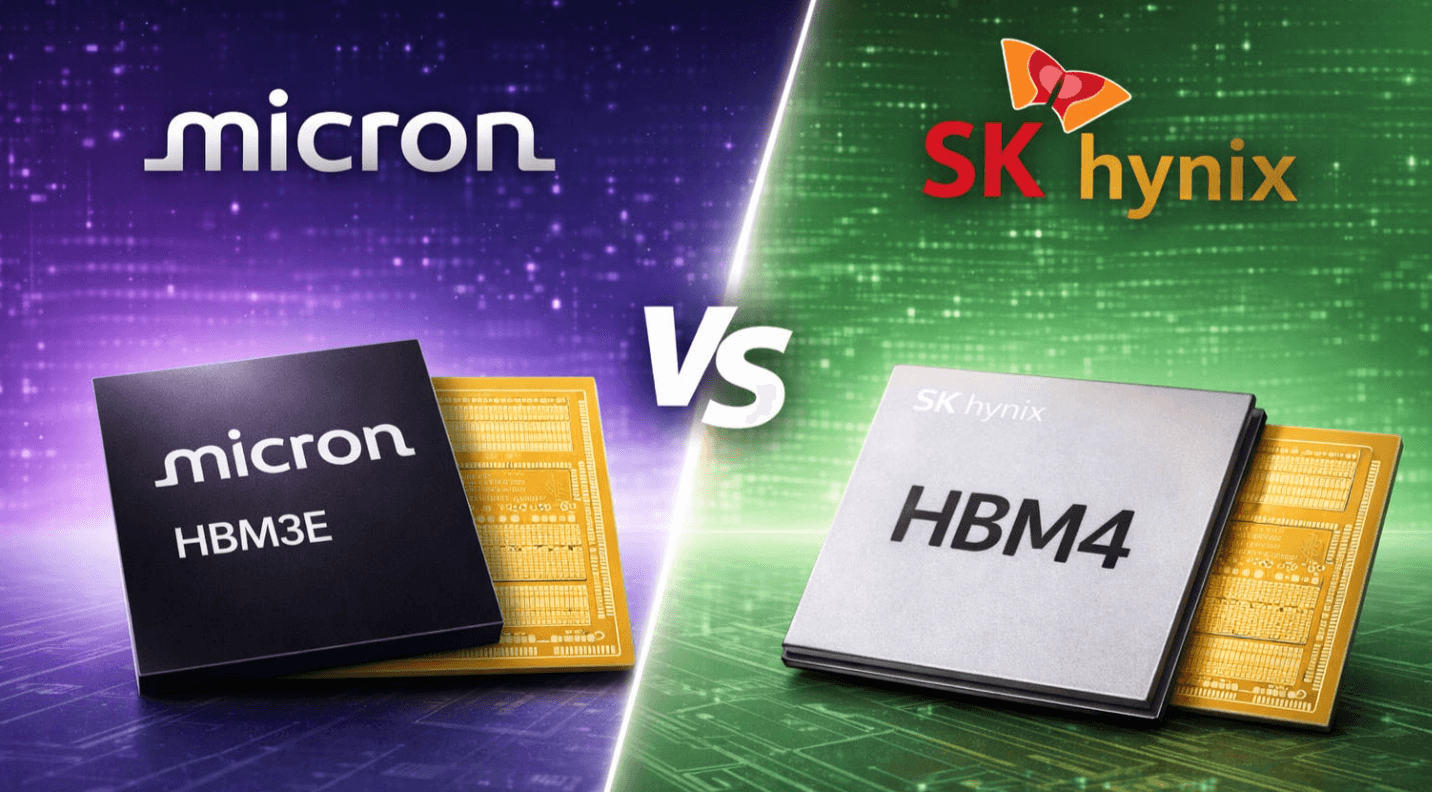
The HBM Market Share Reality That Defines the Comparison
The most important single fact in the Micron stock versus SK Hynix stock comparison is the current HBM market share distribution because HBM is where the extraordinary margins that both companies' valuations depend on are being generated.
SK Hynix holds approximately 58% of global HBM revenue. Micron holds approximately 21%. Samsung holds approximately 21%. Those three numbers add to 100% and tell the entire story of why the valuation comparison between Micron stock and SKHY is more complicated than a simple price-to-earnings multiple comparison suggests.
SK Hynix's HBM leadership is not accidental. The company developed HBM technology alongside AMD before the AI GPU boom made it the most critical component in Nvidia's accelerator stack, and that head start compounded into a production and qualification advantage that Samsung has been closing for years without yet matching. Micron is in an earlier stage of HBM qualification with Nvidia, having achieved qualification for specific products but not yet reaching the volume allocation share that its 21% revenue figure implies is approaching.
The market share distribution matters for the investment comparison because HBM commands dramatically higher margins than conventional DRAM or NAND. SK Hynix's operating margins exceeded Nvidia's in Q1 2026 specifically because of HBM's pricing premium. Micron's extraordinary Q3 gross margin of 84.9% reflected a business that is increasingly HBM-weighted but still carries a larger share of conventional memory than SK Hynix's product mix implies.
If SK Hynix holds its HBM market share through the next GPU platform generation, the valuation premium that its position commands is sustainable and potentially expandable. If Micron's HBM qualification progress allows it to take share from SK Hynix in the next Nvidia platform cycle, the earnings trajectory gap between the two companies narrows and the comparison shifts in Micron's favor.
The Valuation Gap That SKHY's Listing Has Created
Before July 10, comparing the valuation of Micron stock and SK Hynix was an exercise in approximate conversion because SK Hynix's Korean won-denominated Korean Exchange price and Micron's dollar-denominated Nasdaq price required multiple assumptions about exchange rates, accounting differences, and market structure premiums to make comparable.
After July 10, the comparison is more direct. SKHY at $168 and MU at $920 can be evaluated using the same forward earnings multiples, the same currency, and the same market structure.
Micron stock at approximately $920 trades at roughly 22 times trailing earnings on a business that has delivered the strongest quarterly results in its history. The forward multiple on Q4 guidance implies an even more compressed valuation as earnings continue growing toward the $50 billion revenue quarter management guided.
SKHY at approximately $168 trades at roughly 8 to 10 times forward earnings on the same fiscal 2026 estimate basis. That dramatic discount to Micron's multiple reflects the accessibility discount that has persisted for SK Hynix throughout its Korean-only listing period. HSBC documented this discount at an average of 35% over the prior thirteen years. The current discount is considerably larger than that historical average, which suggests the accessibility premium closing from current levels toward historical norms represents a specific and quantifiable upside for SKHY that does not exist for Micron stock.
The valuation gap creates a specific analytical question for investors choosing between the two. Paying 22 times earnings for Micron versus 8 to 10 times earnings for SK Hynix on businesses with comparable underlying demand exposure requires understanding why that gap exists and whether it is justified by fundamental differences or by structural accessibility factors that the Nasdaq listing is beginning to close.
What Micron Offers That SK Hynix Cannot Match
The premium that Micron stock commands relative to SKHY is not entirely explained by the accessibility discount. Micron has specific business characteristics that justify a higher multiple than a pure HBM market share comparison would suggest.
The NAND flash business is the most significant differentiation. Micron competes aggressively in enterprise SSD storage alongside its DRAM and HBM products. SK Hynix has NAND operations but at smaller scale and with less market share than Micron has established. For investors who believe AI workloads will drive both memory and storage demand simultaneously, Micron's broader product portfolio captures both dimensions of that demand in ways that SKHY does not.
The US listing and regulatory status is the second Micron advantage. Micron's status as a US-headquartered, US-listed company with domestic manufacturing gives it access to government contracts, CHIPS Act funding, and regulatory treatment that SK Hynix, as a Korean company with a US ADR, cannot fully replicate. The $250 billion domestic manufacturing commitment and Trump's explicit endorsement today represent the most visible recent expressions of advantages that flow from Micron's US domicile.
The analyst coverage depth favors Micron significantly. Thirty analysts cover MU with an average price target of approximately $1,449. SK Hynix's SKHY has been listed for four days and has attracted limited US based sell side coverage. The information environment for Micron stock is dramatically richer than for SKHY at this early stage of the ADR's public life, which allows investors to make more informed decisions about Micron's specific earnings trajectory and competitive position.
The liquidity advantage is substantial. Micron's daily trading volume regularly exceeds 35 million shares, providing the institutional grade liquidity that allows large position entries and exits without meaningful market impact. SKHY's trading volume in its first week has been meaningful but not yet at the depth that Micron's established market structure provides.
What SKHY Offers That Micron Cannot Match
The advantages that flow to SKHY from SK Hynix's specific position in the AI memory market are equally specific and equally important for investors making the comparison.
HBM market leadership is the primary advantage. SK Hynix at 58% HBM revenue share versus Micron at 21% means SK Hynix is generating more of its revenue from the highest-margin product in the memory industry. That product mix advantage translates directly into operating margin superiority that justifies a higher multiple for SK Hynix's earnings on a quality-adjusted basis, even if the accessibility discount has historically prevented that higher multiple from being expressed in the quoted share price.
The Yongin Semiconductor Cluster commitment is SK Hynix's version of Micron's domestic manufacturing expansion, but at a scale that makes the $250 billion Micron commitment look modest in comparison. The $390 billion planned investment in Yongin over coming decades represents the largest single semiconductor manufacturing commitment in history. The first facilities from the Yongin cluster are expected to begin production in 2027 to 2028, arriving precisely when AI memory demand is projected to continue expanding toward the levels that justify that scale of investment.
The accessibility premium closing from the current discount to Korean equivalent toward US peer parity is a specific and quantifiable source of upside for SKHY that operates independently of the underlying business performance. HSBC estimated the listing should produce approximately a 20% premium over the Korean equivalent over time. SKHY currently trades at a slight discount to the Korean equivalent of approximately $170 to $176. The gap between current pricing and where the listing premium eventually settles represents valuation upside that does not depend on SK Hynix winning any new customers or developing any new products.
The CEO's public statements represent the strongest directional signal available about where HBM demand is heading. SK Hynix CEO Kwak Noh-jung stated publicly that the global memory shortage may last into the next decade. Chairman Chey Tae-won told CNBC that customers say doubling capacity would still not be enough to meet their needs. These are unusually specific public commitments from the management team with the most direct visibility into contracted demand across the AI memory industry.
The Earnings Calendar That Matters for Both
Both Micron stock and SKHY have important near-term earnings events that will provide the first financial data specific to each company's HBM trajectory under current market conditions.
SK Hynix reports Q2 2026 earnings on July 29, which is SKHY's first earnings report as a US-listed security. The market expects SK Hynix to report the strongest quarter in its history with revenue roughly doubling from Q1's already extraordinary level. For SKHY investors, July 29 is the first opportunity to see whether the business trajectory that the $149 IPO price and the subsequent $168 trading level are built on is performing as expected.
Micron's next earnings report arrives in late September based on its historical reporting schedule, which means Micron stock investors have a longer wait before the next fundamental validation of the business trajectory. Q4 guidance of $50 billion in revenue and EPS of approximately $31 is already known. The September report will confirm whether those extraordinary figures materialized and provide Q1 fiscal 2027 guidance that extends the visibility into 2027.
The earnings calendar asymmetry creates a specific near-term dynamic. SKHY's July 29 report arrives before Micron's September report, which means SKHY investors get their business validation catalyst first. If SKHY's July 29 earnings confirm the extraordinary trajectory that both the IPO and the CEO's public statements implied, the institutional accumulation of SKHY positions is likely to accelerate in ways that close the valuation gap with Micron faster than the gradual accumulation cycle alone would produce.
The Michael Burry Factor and What It Means for Both
One specific dimension of the Micron vs SK Hynix comparison that investors should incorporate is the short position that Michael Burry has maintained against Micron stock throughout 2026.
Burry's short against Micron is a valuation and cyclicality argument rather than a fundamental business argument. His thesis is that memory markets are cyclical, that current margins are extraordinary precisely because supply has not yet caught up with demand, and that the supply additions from Micron's $250 billion plan combined with SK Hynix's Yongin cluster and Samsung's southwestern Korea hub will eventually produce the oversupply that ends every memory pricing cycle.
Burry has not disclosed a comparable short position against SK Hynix specifically. If his cyclicality thesis is correct, it applies equally to SK Hynix through the same memory market mechanisms. But the valuation dimension of his Micron short is less clearly applicable to SKHY, because SKHY's current 8 to 10 times forward multiple is dramatically cheaper than the multiple Burry was shorting Micron at during its period of maximum valuation.
For investors who take Burry's cyclicality concern seriously, SKHY at 8 to 10 times forward earnings provides significantly more margin of safety than Micron at 22 times forward earnings against the same cyclical risk. If the memory cycle turns, the stock that was cheaper entering the downturn typically falls less than the stock priced for continued extraordinary performance.
Which Investor Should Own Which Stock
Rather than a single definitive answer, the Micron vs SK Hynix comparison produces three specific investor profiles with three specific answers.
The investor who wants the highest-quality US memory stock with the deepest analyst coverage, the most liquidity, the clearest government support through CHIPS Act funding, and the broadest product portfolio including NAND flash alongside HBM should own Micron stock. The 22 times forward multiple is justified by those specific advantages even though it represents a significant premium to SKHY's multiple.
The investor who wants maximum exposure to HBM market leadership at the lowest available multiple among serious AI memory companies should own SKHY. The 8 to 10 times forward multiple on a business with 58% HBM revenue share, a $390 billion Yongin cluster commitment, and a CEO who just publicly stated the shortage may last into the next decade is a specific combination that does not exist anywhere else in the US-listed market.
The investor who wants full AI memory exposure without concentration in either company's specific risks should own both in proportions that reflect their conviction on the HBM market share trajectory. If SK Hynix maintains its 58% HBM share through the next Nvidia platform cycle, weighting SKHY more heavily is the correct position. If Micron takes meaningful share from SK Hynix in the next cycle as its HBM qualification progress suggests is possible, weighting Micron more heavily captures that transition.
For those looking to participate in global financial markets, having access to the right trading platform matters. WEEX offers crypto and stock trading products, covering major global markets including US stocks and digital assets.
Conclusion
Micron stock versus SK Hynix stock is the AI memory comparison that was not fully available to US investors until July 10, and now that it is, the answer depends on what each investor is optimizing for.
Micron offers established US-listed quality with NAND diversification, CHIPS Act support, deeper analyst coverage, and superior liquidity at a 22 times forward multiple that reflects those advantages. SKHY offers HBM market leadership at an 8 to 10 times forward multiple with the accessibility premium closing mechanism providing valuation upside independent of business performance, at the cost of limited analyst coverage, shorter trading history, and Korean won currency exposure.
The HBM market share trajectory is the variable that will determine which stock performs better over the next eighteen months. If SK Hynix maintains its leadership into the next Nvidia GPU platform, SKHY at current prices will prove to be the more attractive entry. If Micron closes the HBM gap meaningfully with the next platform cycle, Micron stock at current prices will prove to be the smarter positioning. July 29 is where SKHY's business validation arrives. Late September is where Micron's arrives. Both will tell investors which scenario is playing out.
FAQ
1. Is Micron stock or SK Hynix stock the better buy right now?
The comparison depends on what the investor is optimizing for. Micron offers broader product diversification including NAND, US government support through CHIPS Act, deeper analyst coverage, and superior liquidity at a higher 22 times forward multiple. SKHY offers HBM market leadership at 58% revenue share at a dramatically lower 8 to 10 times forward multiple with the accessibility premium closing mechanism providing additional valuation upside.
2. What is the main difference between Micron and SK Hynix in HBM?
SK Hynix holds approximately 58% of global HBM revenue versus Micron's approximately 21%. SK Hynix developed HBM technology earlier and has a deeper qualification history with Nvidia's AI accelerator platforms. Micron is progressing through HBM qualification with the next platform cycle potentially allowing it to close the gap, but the current market share distribution favors SK Hynix significantly.
3. Why does SKHY trade at a lower multiple than Micron despite similar business exposure?
SKHY's lower multiple reflects the accessibility discount that has persisted for SK Hynix throughout its Korean-only listing period. HSBC documented an average 35% discount to US peers over thirteen years. The Nasdaq listing is beginning to close that gap but the institutional accumulation cycle that drives multiple normalization takes months to years rather than days to complete.
4. What is the biggest risk for each stock?
For Micron stock, the supply normalization concern that rising production yields could end HBM pricing premiums faster than the bull case assumes. For SKHY, the July 29 earnings report creating a Samsung-style situation where extraordinary results land only modestly above elevated consensus, triggering profit-taking from the first institutional holders despite strong underlying performance.
5. When do Micron and SK Hynix next report earnings?
SK Hynix reports Q2 2026 results on July 29, its first earnings report as a US-listed security through SKHY. Micron reports fiscal Q4 2026 results in late September based on its historical reporting schedule. The earnings calendar gives SKHY investors their business validation catalyst first, approximately two months before Micron's Q4 confirmation arrives.
Disclaimer: This content is provided for general branding and informational purposes only and doesn't constitute financial, investment, legal, or tax advice. Any events, rewards, online events, or related information mentioned herein should not be considered a recommendation, solicitation, or invitation to purchase, sell, trade, or otherwise deal in any crypto assets or to use any services. Crypto assets are highly volatile and may result in loss. WEEX services and online events may not be available in all regions and are subject to applicable laws, regulations, and eligibility requirements. You are responsible for ensuring that your use of WEEX services complies with local laws and for carefully assessing the risks before participating in any crypto-related activities.
You may also like
SpaceX Stock (SPCX): Price, Outlook and How to Buy
Tangem vs Ledger: Which Hardware Wallet Is Better
Choosing between Tangem and Ledger comes down to how you want to hold keys: a tap-to-sign card with…
Tangem Card Setup: What to Do Since There’s No Seed Phrase
If you’re used to wallets that make you handwrite a seed phrase, Tangem feels different. There’s no seed…

How Does Tangem’s Card-Based Wallet Work? A Complete Beginner’s Guide
This guide explains how a tangem card wallet generates and stores private keys inside a secure chip, how…
What Is Tangem Wallet? A Complete Beginner’s Guide
Tangem is a hardware wallet shaped like a bank card. You tap it on your phone to approve…

Is SafePal Safe? A Look at Its Security Features
SafePal combines an air‑gapped hardware wallet with a mobile app, promising offline key storage and QR‑code transaction signing.…
Is NVDA Stock a Buy Now? What Morgan Stanley and Goldman Sachs Said Today
Morgan Stanley told investors to jump on the bandwagon for Nvidia stock today. Goldman Sachs described the 21.7 times forward earnings multiple as compelling. This guide examines what each firm actually said, what the buy case looks like at current prices, and what August 26 earnings need to deliver.

Why Is Nvidia Stock Up Only 5% While AMD Is Up 300%? What's Going On With NVDA
Nvidia stock has gained roughly 5% year to date while AMD is up approximately 300%, Micron is up roughly 667%, and SanDisk is up over 600%. This guide examines the specific reasons behind that divergence and what it means for investors trying to decide whether the underperformance is a warning or an opportunity.

Micron Stock and the $250 Billion US Investment Plan: What It Means for MU Investors
Micron announced a commitment to invest $250 billion in US-based memory manufacturing and research by 2035. This guide examines what the $250 billion plan actually means for the business, the stock, and the investment case.

MU Stock Tests $900 Again: Is This the Buying Opportunity or the Beginning of a Bigger Drop?
MU stock fell roughly 5.76% on July 14, testing the $900 support level for the second time in recent weeks. This guide examines whether $900 is a floor or a level the market is willing to break through.

MSFT Stock vs GOOGL Stock: Which Cloud Giant Is the Better Buy Right Now?
MSFT stock is down 18% year to date trading near $390. GOOGL stock has pulled back roughly 12% from its all time high trading near $358. Both face the same capex anxiety story. This guide compares them directly on the dimensions that matter for the buy decision rather than on company history.
Microsoft Is Replacing OpenAI With Its Own AI Models: What MAI Means for MSFT Stock
Bloomberg reported that Microsoft is replacing some OpenAI software with its own in house AI models called MAI. MSFT stock is already down 18% year to date. This development changes the market's most persistent concern about Microsoft in a specific and positive direction.
MSFT Stock Is Down 18% in 2026: Buy, Hold or Sell Before July 29 Earnings?
MSFT stock is down roughly 18% year to date, trading around $390 against a 52 week high of $555. This guide focuses on whether the 18% decline and the approaching earnings create a buy, hold, or sell setup rather than a generic investment overview.
SPCX Stock Before August 6 Earnings: What Investors Should Watch
SPCX stock reports its first earnings as a public company on August 6, the same day approximately 20% of insider shares become eligible for sale.This guide focuses on the specific metrics that will actually move SPCX stock on August 6, not on what has already been discussed.
SPCX Stock Price Target of $800: What Would It Actually Take to Get There?
Raymond James set an $800 price target for SPCX stock price on July 14, the highest published analyst target for SpaceX. This guide examines what the business would actually need to deliver for SPCX stock price to reach $800 and what timeline is realistic.
SPCX Stock Jumps After FAA Closes Starship Investigation: What It Means for SpaceX
The FAA formally closed its investigation into SpaceX's Starship booster return on July 14, removing one of the most cited regulatory overhangs on SPCX stock since the IPO. This guide examines what the FAA investigation actually was, why it mattered, and what its closure changes for SpaceX and SPCX investors.
SPCX Stock Is Approaching Its $135 IPO Price: Is This the Best Entry Point?
SPCX stock fell to approximately $137 on July 14, its lowest point since the June 12 IPO at $135. The FAA closed its Starship investigation today, Raymond James set an $800 price target, and Grok 4.5 beat GPT 5.5 in professional benchmarks. This guide examines whether that combination creates the entry point the bull case has been waiting for.
SOXL Stock Explained: How the 3X Semiconductor ETF Really Works
SOXL stock is the Direxion 3X semiconductor ETF. Learn how its daily leverage works, why it decays over time, and who should actually trade it.
SpaceX Stock Today: Live Price, IPO Fallout, and How to Trade It
SpaceX stock today trades near its $135 IPO price after peaking above $225. See the live SPCX picture, analyst targets, and how to trade it.
VEEE Stock: Why Twin Vee Soared on the USFM Merger
VEEE stock spiked after Twin Vee's USFM reverse merger. Here's what shareholders get, the CVR trust, price outlook, and the real risks.
SNDK Stock Today: Price, Rally Drivers, and What to Watch
SNDK stock today trades near $1,700–$1,760 as SanDisk stays 2026's top S&P 500 gainer. See the price, AI-memory drivers, analyst targets, and risks.
How to Buy GDWR Safely: Verify Before You Swap
How to buy GDWR (Global Digital Water Reserve) on Solana — verify the real contract, avoid clones, and size a high-risk position safely.

Introducing Cash Cat ($CASHCAT): Robinhood Chain Meme Token and Price Prediction
Cash Cat is a Robinhood Chain meme token drawing attention after a fast market debut, a 1B supply, and sharp price swings.
LLY Stock Forecast: Can AI and Weight Loss Drugs Drive More Growth?
This article maps how Eli Lilly’s GLP-1 weight-loss franchise and AI-driven R&D could influence LLY’s traditional equity and…
CASHCAT Airdrop: How to Earn Up to 50,000 USDT in Rewards on WEEX
This guide breaks down how the CASHCAT Airdrop works on WEEX, the rewards on the table, and a…
What Is SOXS ETF? The 3X Bear Semiconductor ETF Explained
This guide breaks down SOXS—the Direxion Daily Semiconductor Bear 3X Shares—so you understand what a 3x inverse semiconductor…

Trust Wallet Transaction Stuck or Failed? Here's How to Fix It
A stuck or failed transaction in Trust Wallet is one of the most common problems crypto users encounter and one of the most misunderstood. The cause is almost always related to gas fees or network congestion rather than anything wrong with your wallet. This guide explains why transactions get stuck or fail, how to fix each situation, and how to prevent it from happening again.
Trust Wallet vs MetaMask: Which One Is Better for Beginners?
Trust Wallet and MetaMask are the two most widely used self-custody crypto wallets in the world. They serve different primary purposes and suit different types of crypto users. This guide compares them directly on the dimensions that matter most for beginners making their first wallet choice.

Trust Wallet Seed Phrase: How to Store It Safely and What Never to Do
Your Trust Wallet seed phrase is the single most important piece of information associated with your crypto holdings. Every security measure in the world is irrelevant if your seed phrase is compromised. This guide focuses entirely on storage methods, the specific mistakes that lead to loss, and the habits that protect your seed phrase over the long term.
O Airdrop for New Users: Earn USDT Rewards on WEEX
New to trading O and looking for USDT rewards? This guide explains how the WEEX O Airdrop for…
SpaceX Stock (SPCX): Price, Outlook and How to Buy
Tangem vs Ledger: Which Hardware Wallet Is Better
Choosing between Tangem and Ledger comes down to how you want to hold keys: a tap-to-sign card with…
Tangem Card Setup: What to Do Since There’s No Seed Phrase
If you’re used to wallets that make you handwrite a seed phrase, Tangem feels different. There’s no seed…
How Does Tangem’s Card-Based Wallet Work? A Complete Beginner’s Guide
This guide explains how a tangem card wallet generates and stores private keys inside a secure chip, how…
What Is Tangem Wallet? A Complete Beginner’s Guide
Tangem is a hardware wallet shaped like a bank card. You tap it on your phone to approve…
Is SafePal Safe? A Look at Its Security Features
SafePal combines an air‑gapped hardware wallet with a mobile app, promising offline key storage and QR‑code transaction signing.…