
SPCX Stock Is Approaching Its $135 IPO Price: Is This the Best Entry Point?

 Prefer us on Google
SPCX stock touching $137 today is the market offering investors something it has not offered since the day SpaceX went public: the ability to buy one of the most anticipated stocks of 2026 at approximately the price institutional investors paid in the IPO allocation. SPCX stock fell from its all time high of $225.64 to approximately $137 today, a decline of roughly 39% in less than a month. SPCX stock at this level is not the same investment it was at $225. It is a more interesting one, because the same business that justified $225 in peak enthusiasm is now available at a price that removes most of the speculative premium and leaves the fundamental business case doing most of the valuation work.
Whether the combination of a near IPO price and three positive catalysts arriving simultaneously on July 14 constitutes the best entry point the stock will offer depends on specific questions about timing, risk, and what the August 6 earnings report needs to deliver.
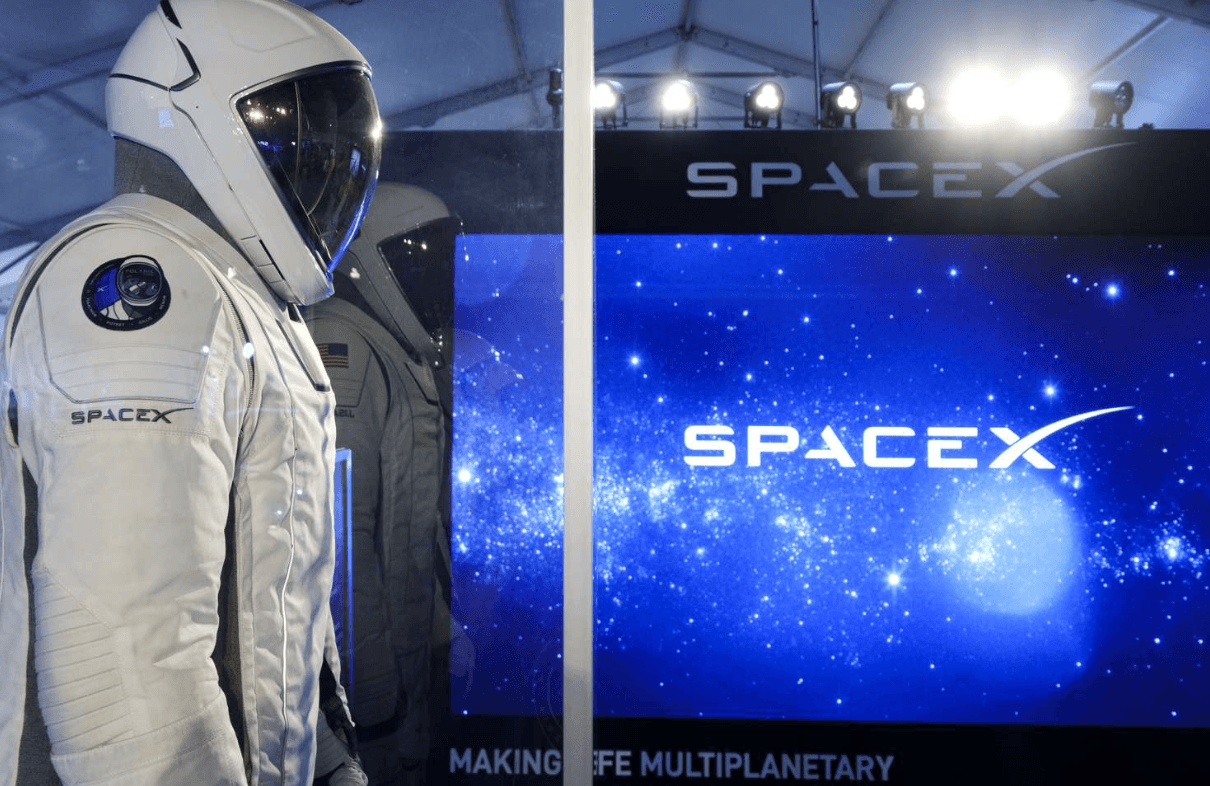
What Drove SPCX Stock From $225 to $137
Understanding the specific causes of the 39% decline from the all-time high is the necessary first step before evaluating whether the entry point is attractive.
The decline from $225 began almost immediately after the all-time high on June 16, just four days after the IPO. The post-IPO correction pattern that SPCX followed mirrors what happened to other highly anticipated public listings in recent memory. The initial enthusiasm that drives price discovery in the first days of trading gets tested by the reality that the first institutional sellers who received IPO allocations below $135 take profits, that retail buyers who chased momentum above $200 begin exiting, and that the mechanical buyers from index inclusions, specifically the Nasdaq-100 inclusion on July 7, fail to sustain prices against the selling pressure from allocated holders.
The Colossus2 data center lawsuit added a specific fundamental concern that compounded the mechanical selling pressure. The NAACP's lawsuit alleging Clean Air Act violations from the gas turbines powering SpaceX's Mississippi data center introduced regulatory risk to the AI compute revenue thesis at the same time that index inclusion demand was dissipating.
The $25 billion bond offering, which received investment-grade ratings from all three major agencies, fell flat in terms of stock price impact. Investment-grade ratings on a $25 billion offering from a company losing $4.28 billion in its most recent quarter would normally be a significant positive signal. The market instead focused on the scale of the capital raise relative to current earnings, pushing SPCX stock down 16% on the day of the offering.
Today's low of approximately $136 to $137 represents the point where all of those selling forces have largely run their course. IPO allocees who planned to take profits have had six weeks to do so. Momentum retail buyers who chased above $200 have largely exited. Index inclusion mechanical demand has been absorbed. What remains is the fundamental question of whether the underlying business justifies $137 or above.
The Three Catalysts That Arrived Today
Three specific developments on July 14 change the investment calculus at $137 in ways that were not present at any prior point in SPCX stock's public life.
The FAA closing its investigation into the Starship booster return is the most consequential of the three for the long-term business case. The investigation had been one of the most cited regulatory overhangs on SPCX stock since the IPO, creating uncertainty about the timeline for Starship's commercial deployment. Starship is the vehicle that SpaceX management described as the foundation for orbital data centers, Mars missions, and the next phase of Starlink deployment at scale. A regulatory investigation that could have delayed Starship's development timeline indefinitely has now been formally resolved.
The FAA investigation closure arriving on the same day SPCX stock touches near-IPO prices is the kind of coincidence that creates specific buying opportunities. The stock has been pricing in the regulatory risk. The risk has now been removed. The repricing of that removed risk has not yet happened because the news is hours old.
Raymond James reiterating its Strong Buy rating with an $800 price target is the second catalyst. The $800 figure is the highest published price target from any analyst covering SPCX and implies approximately 480% upside from current levels. Raymond James cited SpaceX's launch dominance and falling launch costs as the specific drivers of the extraordinary target. Whether $800 is achievable in any reasonable timeframe is a separate question from whether the reiteration of a high-conviction buy rating on a day when the stock is near its IPO price is a meaningful signal. It is.
Grok 4.5 outperforming GPT 5.5 and Claude Opus 4.8 in professional work benchmarks is the third catalyst, and it is the one most directly relevant to how SpaceX's AI segment gets valued relative to the Anthropic and Google relationships that underpin the company's near-term revenue story. An AI model that demonstrably beats the leading models from OpenAI and Anthropic strengthens the case that SpaceX's AI infrastructure is not just a hosting business for other companies' models but a genuine AI company with its own competitive capabilities.
What $137 Actually Implies About the Business
At $137, SPCX stock implies a market capitalization of approximately $1.04 trillion. Evaluating whether that valuation is attractive requires understanding what the business generates and what it is expected to generate rather than simply comparing the current price to the all-time high.
SpaceX reported a net loss of approximately $4.28 billion in Q1 2026. The loss reflects the extraordinary capital expenditure associated with the Starlink expansion, Starship development, and AI data center construction that management described as a significant growth phase in the IPO roadshow. The business that is currently losing money at scale has specific revenue streams that are growing rapidly enough to make the path to profitability visible if not yet present in reported numbers.
Starlink is the only currently profitable segment and is growing toward the milestone of 10 million subscribers that management has described as significant. Each Starlink subscriber represents recurring monthly revenue with minimal marginal cost once the satellite constellation is in orbit. The constellation is already substantially built. The path from current subscriber count to 10 million is growth rather than infrastructure construction, which means the marginal economics improve significantly as subscriber numbers scale.
The AI compute contracts with Anthropic and Google represent the revenue stream most directly visible to investors but also the most contested. The Anthropic contract's 180-day lease structure with mutual 90-day cancellation terms means the $45 billion total contract value cited in media coverage represents a maximum scenario rather than a guaranteed outcome. The Google contract's September 30 deadline for delivering 110,000 GPUs is a specific near-term test that the August 6 earnings call will address for the first time.
At $137, investors are paying approximately $1.04 trillion for a company whose Starlink business alone, at mature subscriber numbers and current satellite infrastructure, commands a substantial standalone valuation according to every analyst who has attempted to value it separately. Raymond James's $800 target implies the AI and launch segments add enormous additional value on top of Starlink. Even the more conservative $200 to $239 targets from Citi and Bernstein imply that Starlink's value significantly exceeds the current $137 stock price.
The August 6 Risk That the Entry Point Must Acknowledge
The most important risk to buying SPCX stock at $137 today is not the Colossus2 lawsuit, the bond offering debt load, or any of the concerns that drove the stock from $225 to $137. It is the August 6 earnings report and lockup expiry arriving simultaneously on the same date.
August 6 is SpaceX's first earnings report as a public company. It will reveal Q2 financial data including Starlink subscriber count and revenue trajectory, AI segment revenue from the Anthropic and Google contracts, launch services revenue, and operating expenses that determine how quickly the current loss trajectory narrows. Management commentary on the Colossus2 lawsuit status, the Google September GPU delivery timeline, and any update on the Starlink 10 million subscriber milestone will be the forward-looking signals investors use to revise their models.
Simultaneously, approximately 20% of insider shares become eligible for sale after the August 6 report. At $137, that represents a significant potential supply overhang from early investors and employees who have been locked up since the June 12 IPO. The combination of a first earnings report and a major lockup expiry on the same date creates the most concentrated single-event risk in SPCX stock's brief public history.
The entry at $137 today means holding through August 6 with full exposure to both the earnings outcome and the lockup selling. A strong earnings report with positive Starlink trajectory, AI revenue confirmation, and Google deadline confidence would likely push the stock significantly above $137 before the lockup selling materializes. A weak earnings report arriving simultaneously with lockup selling could push the stock toward or potentially below the $135 IPO price for the first time.
The IPO Price Floor That May Not Actually Be a Floor
One specific assumption that many retail investors are making about SPCX stock at $137 is that the $135 IPO price represents a meaningful support level. The logic is that institutional investors who received IPO allocations at $135 will not sell below their cost basis, providing a floor.
This assumption has limited support in the historical pattern of IPO price floors. Companies that decline to their IPO price frequently break through it, particularly when the post-IPO period has attracted retail momentum buyers who are now underwater and looking to exit at any level rather than the specific $135 institutional cost basis. SPCX's first trading day saw approximately 500 million shares trade, meaning the vast majority of current holders paid above $135 and are underwater if the stock approaches $135.
The practical implication is that $137 should not be bought as a floor trade based on IPO price support. It should be bought as a fundamental value trade based on whether the business at $1.04 trillion market capitalization is worth more than its current price, with the full acknowledgment that the stock could trade below $135 if August 6 disappoints.
What Makes This Entry Different From Buying at Any Prior Level
The specific combination of factors present at $137 today is genuinely different from what was available at any previous price level in SPCX stock's public life.
At $225, the stock had maximum speculative enthusiasm and minimum regulatory clarity. The FAA investigation was open. The Colossus2 lawsuit was newly filed. The AI contract structure details had not been fully disclosed. The valuation embedded every optimistic assumption simultaneously.
At $160 following the initial post-ATH correction, the regulatory and contract risks remained present but the speculative premium had begun to deflate. The Nasdaq-100 inclusion had not yet occurred and the mechanical demand it would generate had not yet been absorbed.
At $137 today, the FAA investigation is closed, the Colossus2 lawsuit is a known and partially priced risk, the Nasdaq-100 inclusion demand has been fully absorbed, and the stock has demonstrated it can find buyers near the IPO price. The uncertainty that remains is concentrated in August 6 rather than distributed across multiple unknowns simultaneously. That concentration of remaining risk into a single identifiable event is actually a more favorable risk structure than the multiple simultaneous unknowns that existed at higher prices.
Three Investor Profiles and Their Different Answers
For long-term investors with a twelve to twenty-four month horizon who believe Starlink reaches 10 million subscribers before the end of 2027 and that the AI compute contracts convert into sustained revenue, $137 with the FAA investigation resolved is the most attractive entry SPCX stock has offered since the IPO. The regulatory overhang has been removed, the speculative premium has been deflated, and the fundamental business case is doing the valuation work rather than momentum.
For investors specifically concerned about August 6, waiting for the earnings report provides definitive information about the Starlink trajectory, AI revenue, and Google deadline status before committing. The cost is that the FAA catalyst and the near-IPO price may not both be present simultaneously after August 6 if the report is strong and the stock recovers meaningfully before then.
For traders rather than investors, the confluence of FAA investigation closure, near-IPO price, and Raymond James $800 reiteration on the same day creates a specific short-term setup where the positive catalysts have not yet been reflected in the price and where the stock has demonstrated support near $135 to $137.
For those looking to participate in global financial markets, having access to the right trading platform matters. WEEX offers crypto and stock trading products, covering major global markets including US stocks and digital assets.
Conclusion
SPCX stock at $137 is not the same investment as SPCX stock at $225. The speculative premium from the IPO enthusiasm has deflated. The FAA regulatory overhang has been resolved as of today. The Nasdaq-100 inclusion mechanical demand has been absorbed. Three positive catalysts arrived on the same day the stock touched near-IPO prices, creating a confluence that has not existed at any prior point in the stock's public history.
Whether this is the best entry point depends entirely on whether August 6 delivers the earnings confirmation that the fundamental business case requires. A strong first earnings report with Starlink subscriber momentum, AI revenue visibility, and Google deadline confidence would validate the $137 entry in a way that makes the current near-IPO price look like the obvious buying opportunity in hindsight. A weak first earnings report combined with lockup selling would test whether $135 is a floor or a level the market is willing to break through.
The FAA investigation is closed. The price is at IPO levels. The analyst with the highest price target just reiterated it. The remaining question is eight days away from providing its first real answer.
FAQ
1. Why is SPCX stock near its IPO price?
SPCX stock declined approximately 39% from its all-time high of $225.64 set on June 16 through a combination of post-IPO profit-taking by allocated institutional investors, retail momentum sellers exiting above-cost positions, Colossus2 lawsuit concerns, and the absorption of Nasdaq-100 inclusion mechanical buying demand. The decline brought the stock to approximately $137, close to the $135 IPO price.
2. What are the catalysts for SPCX stock on July 14?
Three specific catalysts arrived simultaneously. The FAA formally closed its investigation into SpaceX's Starship booster return, removing a major regulatory overhang on the Starship development timeline. Raymond James reiterated its Strong Buy rating with an $800 price target, the highest analyst target for SPCX. Grok 4.5 outperformed GPT 5.5 and Claude Opus 4.8 in professional work benchmarks, strengthening SpaceX's AI valuation narrative.
3. Is the $135 IPO price a floor for SPCX stock?
Not necessarily. IPO prices frequently fail to provide genuine support floors when the post-IPO holder base includes retail momentum buyers who entered above the IPO price and are underwater. A weak August 6 earnings report combined with lockup selling could push SPCX below $135. The IPO price should be evaluated as a reference point rather than a guaranteed support level.
4. What is the biggest risk to buying SPCX stock at $137?
August 6 is the concentrated risk event where SpaceX reports its first quarterly earnings simultaneously with approximately 20% of insider shares becoming eligible for sale. A disappointing earnings report arriving with lockup selling pressure represents the scenario most likely to push SPCX below the IPO price for the first time.
5. What do analysts say about SPCX stock price?
Raymond James has the highest target at $800 with a Strong Buy rating. Bernstein maintains Outperform with a $239 target. BofA has a $235 target. Citi initiated with a $200 target. The average analyst target is approximately $242, implying roughly 77% upside from current levels near $137.
Disclaimer: This content is provided for general branding and informational purposes only and doesn't constitute financial, investment, legal, or tax advice. Any events, rewards, online events, or related information mentioned herein should not be considered a recommendation, solicitation, or invitation to purchase, sell, trade, or otherwise deal in any crypto assets or to use any services. Crypto assets are highly volatile and may result in loss. WEEX services and online events may not be available in all regions and are subject to applicable laws, regulations, and eligibility requirements. You are responsible for ensuring that your use of WEEX services complies with local laws and for carefully assessing the risks before participating in any crypto-related activities.
You may also like

SpaceX Stock (SPCX): Price, Outlook and How to Buy
Tangem vs Ledger: Which Hardware Wallet Is Better
Choosing between Tangem and Ledger comes down to how you want to hold keys: a tap-to-sign card with…
Tangem Card Setup: What to Do Since There’s No Seed Phrase
If you’re used to wallets that make you handwrite a seed phrase, Tangem feels different. There’s no seed…
How Does Tangem’s Card-Based Wallet Work? A Complete Beginner’s Guide
This guide explains how a tangem card wallet generates and stores private keys inside a secure chip, how…
What Is Tangem Wallet? A Complete Beginner’s Guide
Tangem is a hardware wallet shaped like a bank card. You tap it on your phone to approve…
Is SafePal Safe? A Look at Its Security Features
SafePal combines an air‑gapped hardware wallet with a mobile app, promising offline key storage and QR‑code transaction signing.…
Micron Stock vs SK Hynix Stock: Which AI Memory Giant Is the Better Buy After SKHY's Nasdaq Debut?
Micron stock is trading down roughly 27% from its all time high. SK Hynix stock through SKHY is trading up 13% from IPO price. This guide compares them directly on the dimensions that matter for the buy decision now that SKHY gives US investors direct access to both names for the first time.

Micron Stock and the $250 Billion US Investment Plan: What It Means for MU Investors
Micron announced a commitment to invest $250 billion in US-based memory manufacturing and research by 2035. This guide examines what the $250 billion plan actually means for the business, the stock, and the investment case.

MU Stock Tests $900 Again: Is This the Buying Opportunity or the Beginning of a Bigger Drop?
MU stock fell roughly 5.76% on July 14, testing the $900 support level for the second time in recent weeks. This guide examines whether $900 is a floor or a level the market is willing to break through.

MSFT Stock vs GOOGL Stock: Which Cloud Giant Is the Better Buy Right Now?
MSFT stock is down 18% year to date trading near $390. GOOGL stock has pulled back roughly 12% from its all time high trading near $358. Both face the same capex anxiety story. This guide compares them directly on the dimensions that matter for the buy decision rather than on company history.

Microsoft Is Replacing OpenAI With Its Own AI Models: What MAI Means for MSFT Stock
Bloomberg reported that Microsoft is replacing some OpenAI software with its own in house AI models called MAI. MSFT stock is already down 18% year to date. This development changes the market's most persistent concern about Microsoft in a specific and positive direction.
MSFT Stock Is Down 18% in 2026: Buy, Hold or Sell Before July 29 Earnings?
MSFT stock is down roughly 18% year to date, trading around $390 against a 52 week high of $555. This guide focuses on whether the 18% decline and the approaching earnings create a buy, hold, or sell setup rather than a generic investment overview.
SPCX Stock Before August 6 Earnings: What Investors Should Watch
SPCX stock reports its first earnings as a public company on August 6, the same day approximately 20% of insider shares become eligible for sale.This guide focuses on the specific metrics that will actually move SPCX stock on August 6, not on what has already been discussed.
SPCX Stock Price Target of $800: What Would It Actually Take to Get There?
Raymond James set an $800 price target for SPCX stock price on July 14, the highest published analyst target for SpaceX. This guide examines what the business would actually need to deliver for SPCX stock price to reach $800 and what timeline is realistic.
SPCX Stock Jumps After FAA Closes Starship Investigation: What It Means for SpaceX
The FAA formally closed its investigation into SpaceX's Starship booster return on July 14, removing one of the most cited regulatory overhangs on SPCX stock since the IPO. This guide examines what the FAA investigation actually was, why it mattered, and what its closure changes for SpaceX and SPCX investors.
SOXL Stock Explained: How the 3X Semiconductor ETF Really Works
SOXL stock is the Direxion 3X semiconductor ETF. Learn how its daily leverage works, why it decays over time, and who should actually trade it.
SpaceX Stock Today: Live Price, IPO Fallout, and How to Trade It
SpaceX stock today trades near its $135 IPO price after peaking above $225. See the live SPCX picture, analyst targets, and how to trade it.
VEEE Stock: Why Twin Vee Soared on the USFM Merger
VEEE stock spiked after Twin Vee's USFM reverse merger. Here's what shareholders get, the CVR trust, price outlook, and the real risks.
SNDK Stock Today: Price, Rally Drivers, and What to Watch
SNDK stock today trades near $1,700–$1,760 as SanDisk stays 2026's top S&P 500 gainer. See the price, AI-memory drivers, analyst targets, and risks.
How to Buy GDWR Safely: Verify Before You Swap
How to buy GDWR (Global Digital Water Reserve) on Solana — verify the real contract, avoid clones, and size a high-risk position safely.

Introducing Cash Cat ($CASHCAT): Robinhood Chain Meme Token and Price Prediction
Cash Cat is a Robinhood Chain meme token drawing attention after a fast market debut, a 1B supply, and sharp price swings.
LLY Stock Forecast: Can AI and Weight Loss Drugs Drive More Growth?
This article maps how Eli Lilly’s GLP-1 weight-loss franchise and AI-driven R&D could influence LLY’s traditional equity and…
CASHCAT Airdrop: How to Earn Up to 50,000 USDT in Rewards on WEEX
This guide breaks down how the CASHCAT Airdrop works on WEEX, the rewards on the table, and a…
What Is SOXS ETF? The 3X Bear Semiconductor ETF Explained
This guide breaks down SOXS—the Direxion Daily Semiconductor Bear 3X Shares—so you understand what a 3x inverse semiconductor…
Trust Wallet Transaction Stuck or Failed? Here's How to Fix It
A stuck or failed transaction in Trust Wallet is one of the most common problems crypto users encounter and one of the most misunderstood. The cause is almost always related to gas fees or network congestion rather than anything wrong with your wallet. This guide explains why transactions get stuck or fail, how to fix each situation, and how to prevent it from happening again.
Trust Wallet vs MetaMask: Which One Is Better for Beginners?
Trust Wallet and MetaMask are the two most widely used self-custody crypto wallets in the world. They serve different primary purposes and suit different types of crypto users. This guide compares them directly on the dimensions that matter most for beginners making their first wallet choice.

Trust Wallet Seed Phrase: How to Store It Safely and What Never to Do
Your Trust Wallet seed phrase is the single most important piece of information associated with your crypto holdings. Every security measure in the world is irrelevant if your seed phrase is compromised. This guide focuses entirely on storage methods, the specific mistakes that lead to loss, and the habits that protect your seed phrase over the long term.
O Airdrop for New Users: Earn USDT Rewards on WEEX
New to trading O and looking for USDT rewards? This guide explains how the WEEX O Airdrop for…
How to Install Trust Wallet Safely: What Most Guides Leave Out
Most Trust Wallet installation guides tell you where to download the app and how to save your recovery phrase. Few explain the specific mistakes that result in lost funds, compromised wallets, and successful phishing attacks during the setup process. This guide focuses on what those other guides skip.
Samsung Stock vs SK Hynix Stock: Which Korean Memory Giant Is the Better Buy Right Now?
Samsung stock and SK Hynix stock are the two largest memory companies in the world and the two dominant forces in the AI memory boom of 2026. This guide compares the two specifically on the variables that matter for the buy decision rather than on company history or general descriptions.
SpaceX Stock (SPCX): Price, Outlook and How to Buy
Tangem vs Ledger: Which Hardware Wallet Is Better
Choosing between Tangem and Ledger comes down to how you want to hold keys: a tap-to-sign card with…
Tangem Card Setup: What to Do Since There’s No Seed Phrase
If you’re used to wallets that make you handwrite a seed phrase, Tangem feels different. There’s no seed…
How Does Tangem’s Card-Based Wallet Work? A Complete Beginner’s Guide
This guide explains how a tangem card wallet generates and stores private keys inside a secure chip, how…
What Is Tangem Wallet? A Complete Beginner’s Guide
Tangem is a hardware wallet shaped like a bank card. You tap it on your phone to approve…
Is SafePal Safe? A Look at Its Security Features
SafePal combines an air‑gapped hardware wallet with a mobile app, promising offline key storage and QR‑code transaction signing.…