
How Does Adjusting Your Margin Impact Your Liquidation Price in Leveraged Trading?

Trading with leverage might sound complicated at first, but don’t worry—it’s much simpler than it seems! One of the most important things to understand is your liquidation price. This is the price at which your trade automatically closes if the market moves against you, to prevent further losses. Sounds serious, right? But here’s the good news: you can adjust it by tweaking your margin.
So, what happens when you add or withdraw funds (your margin)? Adjusting your margin directly changes your liquidation price, giving you more room to breathe in those unpredictable markets. And with tools like WEEX Crypto Futures Calculator, you can easily calculate how these adjustments impact your trades and make informed decisions.
Let’s break it down step by step so you can confidently manage your margin and liquidation price—even if you’re brand new to this!
What is the Liquidation Price?
Think of your liquidation price as a safety net. If the market moves too far against your trade, and your margin can no longer cover potential losses, the exchange will automatically close your position to protect you from losing more money.
But here’s the key: you can adjust this safety net!
- Adding more funds (margin) gives you a bigger safety cushion, moving the liquidation price further away.
- Withdrawing funds brings the liquidation price closer, increasing your risk.
Understanding this is a big step in mastering leveraged trading.
Why Adjust Your Margin?
- To Avoid Liquidation: Adding more funds lowers the risk of hitting the liquidation price.
- To Free Up Capital: Withdrawing excess margin can free up funds for other trades, though it increases the risk of liquidation.
- To Manage Risks: Adjusting margin lets you control how much is at stake in a single trade.
How Margin Adjustments Affect Liquidation Price?
The relationship between your margin and liquidation price is straightforward:
Adding Margin: Lowers the liquidation price for long positions (or raises it for short positions). This means more breathing room before the market hits your liquidation price.
Reducing Margin: Raises the liquidation price for long positions (or lowers it for short positions), increasing your risk of liquidation.
Liquidation Price Formula (Simplified)
If you want to know the liquidation price formulas, here’s how to calculate your new liquidation price after adjusting your margin:
For long positions:
New Liquidation Price = (Initial Margin + Added Margin − (Position Size × Entry Price)) ÷ Position Size
For short positions:
New Liquidation Price = (Initial Margin + Added Margin + (Position Size × Entry Price)) ÷ Position Size
A Real Example: Adjusting Margin for a Long Position
Let’s walk through a simple example to see how adjusting your margin affects your liquidation price.
Scenario:
- You open a long position with $1,000 margin.
- You use 10x leverage, which gives you a total position size of $10,000.
- You enter the trade at $30,000 per Bitcoin.
Now, let’s calculate your liquidation price step by step.
Step 1: Calculate Initial Liquidation Price
To find the initial liquidation price, we use this formula:
Liquidation Price = (Margin − (Position Size ÷ Entry Price)) ÷ Position Size
Plugging in the numbers:
- Liquidation Price = ($1,000 − ($10,000 ÷ $30,000)) ÷ $10,000
⬇️ - Liquidation Price = ($1,000 − $0.33) ÷ $10,000
⬇️ - Liquidation Price = $27,000
So, your initial liquidation price is $27,000. If Bitcoin’s price drops to $27,000, your position will be liquidated.
Step 2: Add Margin
Now, you decide to add $500 to your margin. This increases your margin from $1,000 to $1,500.
Step 3: Recalculate Liquidation Price
With the new margin, we recalculate the liquidation price using the same formula:
Liquidation Price = (Margin − (Position Size ÷ Entry Price)) ÷ Position Size
Here’s the math:
- New Liquidation Price = ($1,500 − ($10,000 ÷ $30,000)) ÷ $10,000
⬇️ - New Liquidation Price = ($1,500 − $0.33) ÷ $10,000
⬇️ - New Liquidation Price = $26,500
By adding $500 to your margin, your liquidation price drops from $27,000 to $26,500. This gives you more room for the market to move without hitting your liquidation price.
It means that: by increasing your margin, you’ve lowered your liquidation price, reducing the risk of being liquidated. This adjustment gives you more flexibility and a better chance to ride out market fluctuations.
A Real Example: Adjusting Margin for a Short Position
Let’s look at how adjusting your margin impacts your liquidation price when you’re in a short position.
Scenario:
- You open a short position with $1,000 margin.
- You use 10x leverage, meaning your total position size is $10,000.
- The entry price is $30,000 per Bitcoin.
Now, let’s calculate the liquidation price step by step.
Step 1: Calculate Initial Liquidation Price
For short positions, the formula to calculate the liquidation price is:
Liquidation Price = (Margin + (Position Size ÷ Entry Price)) ÷ Position Size
Here’s the calculation:
- Liquidation Price = ($1,000 + ($10,000 ÷ $30,000)) ÷ $10,000
⬇️ - Liquidation Price = ($1,000 + $0.33) ÷ $10,000
⬇️ - Liquidation Price = $33,000
So, your initial liquidation price is $33,000. If Bitcoin’s price rises to $33,000, your position will be liquidated.
Step 2: Add Margin
Now, you decide to add $500 to your margin. This increases your margin from $1,000 to $1,500.
Step 3: Recalculate Liquidation Price
With the new margin, we recalculate the liquidation price using the same formula:
Liquidation Price = (Margin + (Position Size ÷ Entry Price)) ÷ Position Size
Here’s the updated calculation:
- New Liquidation Price = ($1,500 + ($10,000 ÷ $30,000)) ÷ $10,000
⬇️ - New Liquidation Price = ($1,500 + $0.33) ÷ $10,000
⬇️ - New Liquidation Price = $33,500
By adding $500 to your margin, your liquidation price increases from $33,000 to $33,500, giving you more room to stay in the trade.
Tips for Managing Liquidation Price
Monitor Your Margin Levels: Always keep track of your margin and understand how adjustments affect your liquidation price.
Use Stop-Loss Orders: Protect yourself by setting stop-loss orders to exit trades before the market reaches your liquidation price.
Avoid Over-Leverage: Using high leverage can increase the risk of liquidation. Be cautious and only use leverage you’re comfortable with.
Plan for Volatility: Cryptocurrencies are highly volatile, so ensure you maintain enough margin to handle sudden price swings.
Why Adjusting Margin Matters?
By increasing your margin, you lower the risk of liquidation and give yourself more flexibility to manage your trade. Always recalculate your liquidation price after adjusting your margin to stay in control of your position.
Related article:
How to Use Liquidation Prices to Boost Your Trading Strategy
You may also like

World Collective Oil Reserve (WCOR) Price Prediction 2026-2045: Expert Insights
WCOR (World Collective Oil Reserve) is a Solana-based cryptocurrency token that promotes an “oil reserve + real-world asset (RWA) narrative.” However, there is no public evidence that it is actually backed by physical oil assets. It is essentially a highly speculative, narrative-driven token. Its current market cap is around $14 million, with relatively low liquidity and high volatility, and its price is mainly driven by market sentiment and hype. Most analyses suggest limited short-term upside, with a possible gradual increase to around $0.02 by 2030. Overall, it is considered a high-risk crypto asset driven more by narrative speculation than fundamentals.
WEEX Gold & Silver 0% Fees Event: Trade Metals, Crude Oil and Stock Futures With Zero Fees
Join the WEEX 0-fee futures event from April 16 to May 31, 2026. Trade eligible gold, silver, crude oil, and stock futures with 0% fees.
Can PAC Coin Reach $1 Soon? Analyzing Public Asset Control
PAC is a Solana-based meme token with a government-themed narrative, but it is highly speculative.
At its current price (~$0.0009) and 1B supply, reaching $1 would require a $1B market cap, which is very unlikely.
Short-term moves to $0.001 or $0.01 are more realistic, but the token is highly volatile due to low liquidity and hype-driven trading.
Overall, $1 is not a realistic target, and PAC is better suited for short-term speculation than long-term investment.
What Is SAOS? Strategic American Oil Supply Token Explained
SAOS is a meme token on Solana with a 75,000 USD market cap and 22,000 USD locked liquidity, positioned around oil supply themes but lacking real asset backing
It thrives on pure narrative speculation, with no utility, website, or doxxed team, making it highly volatile and attention-dependent
Traders should distinguish SAOS from legitimate real-world asset projects, as its branding is speculative rather than substantive
Positive aspects include locked liquidity reducing rug pull risks, but low trading activity signals high uncertainty
NBIS Stock: What Nebius’ AI Cloud Surge Means Now
NBIS stock jumped as Nebius reported rapid AI cloud growth. See the key Q1 2026 numbers, catalysts, valuation risks, and what to watch next.

What Is Public Asset Control (PAC) Coin? Explained for Beginners
Public Asset Control (PAC) is a Solana-based token that uses a “government asset control” narrative involving oil and gold themes, but it has no verified ties to any real institutions or governments. It is mainly an entertainment-focused, speculative meme coin.
The project’s claims about links to entities like BlackRock or Palantir are unverified, and its own disclaimer states it is not a real financial or institutional asset. Like many new Solana tokens, PAC is highly volatile, with low liquidity and limited transparency, including no fully verified audit.
Overall, PAC is a high-risk speculative token driven by hype and storytelling rather than real utility. Beginners are advised to be cautious, verify contract details, and prioritize risk control before considering any trading.
Public Asset Control: What PAC Token Really Is
Public Asset Control PAC is a Solana token with bold asset-control branding. Learn what it is, what is verified, and the key trading risks.

Why Is Chinese Oil Asset Reserve (COAR Crypto) Trending Now?
Why is Chinese Oil Asset Reserve trending now? Learn the latest COAR crypto price action, trading volume, oil narrative, Solana pair data, and what is driving attention today.

How to Buy Chinese Oil Asset Reserve (COAR) Token in 2026: Latest Step-by-Step Guide, Contract Address, and Safe Buying Tips
How to buy Chinese Oil Asset Reserve (COAR) token step by step, including the official COAR contract address, Solana wallet setup, SOL funding, and latest market data.

COAR Coin: What Chinese Oil Asset Reserve Really Is
COAR coin is a new Solana oil-narrative token. Learn what Chinese Oil Asset Reserve claims, how to verify the contract, and key trading risks.

Did the CLARITY Act Pass Today? Latest Status and the History of the Crypto Bill
SEO meta description: Did the CLARITY Act pass today? Read the latest crypto bill update, the history of the CLARITY Act, House and Senate votes, and what happens next for U.S. crypto regulation.
What Is Chinese Oil Asset Reserve (COAR) Token? $COAR and Coar Stock Relationship Explained
Chinese Oil Asset Reserve (COAR) token explained, $COAR price, Solana details, and the relationship between COAR and Coar stock. Learn the latest facts.
Trade to Earn on WEEX: Join the Futures Trading Event and Earn Real-Time WXT Rewards Throughout May 2026
Join the WEEX Trade to Earn Series Five event from May 1–31, 2026 and earn real-time WXT rewards through futures trading. Boost your rebate level, complete missions, invite friends, and maximize your trade to earn rewards with USDT-M futures trading.
What Is World Cup Meme Coin? Football Meme Crypto Narrative Explained
World Cup meme coin $WCMEME is a Solana token that collapsed 96% in 24 hours. Learn how football meme narratives work and the risks involved.

Trade to Earn With Futures Trading on WEEX: How Smart Traders Are Turning Every Position Into WXT Rewards
Join the WEEX Trade to Earn Series Five campaign and earn real-time WXT rewards through futures trading from May 1–31, 2026. Upgrade mining levels, unlock higher rebate ratios, complete missions, and maximize your trade to earn rewards with USDT-M futures trading.
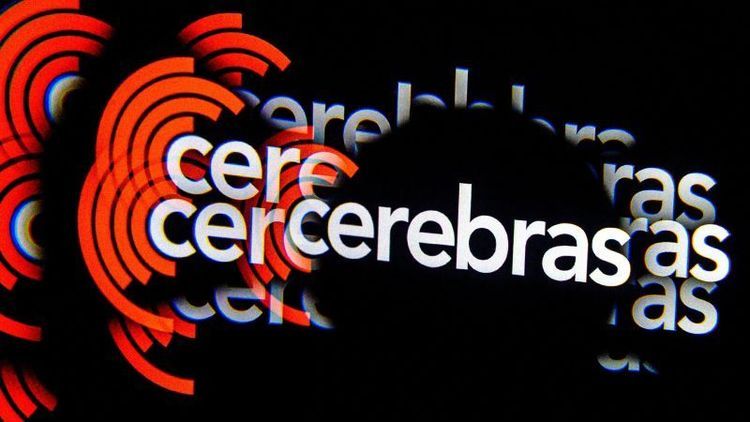
CBRS Stock: What to Know About Cerebras After Its IPO
CBRS stock surged after Cerebras priced its IPO at $185. Learn what the AI chipmaker does, why valuation matters, and what risks to watch.

SpaceX IPO Stock Market Impact: What Investors Should Watch
SpaceX’s IPO could reshape indexes, liquidity, space stocks, and crypto risk appetite. Here is what matters before the listing.

HMSTR Token Price: What Moves Hamster Kombat Now
Track HMSTR token price, supply, catalysts, and risks. Learn what drives Hamster Kombat price action and what traders should watch.
World Collective Oil Reserve (WCOR) Price Prediction 2026-2045: Expert Insights
WCOR (World Collective Oil Reserve) is a Solana-based cryptocurrency token that promotes an “oil reserve + real-world asset (RWA) narrative.” However, there is no public evidence that it is actually backed by physical oil assets. It is essentially a highly speculative, narrative-driven token. Its current market cap is around $14 million, with relatively low liquidity and high volatility, and its price is mainly driven by market sentiment and hype. Most analyses suggest limited short-term upside, with a possible gradual increase to around $0.02 by 2030. Overall, it is considered a high-risk crypto asset driven more by narrative speculation than fundamentals.
WEEX Gold & Silver 0% Fees Event: Trade Metals, Crude Oil and Stock Futures With Zero Fees
Join the WEEX 0-fee futures event from April 16 to May 31, 2026. Trade eligible gold, silver, crude oil, and stock futures with 0% fees.
Can PAC Coin Reach $1 Soon? Analyzing Public Asset Control
PAC is a Solana-based meme token with a government-themed narrative, but it is highly speculative.
At its current price (~$0.0009) and 1B supply, reaching $1 would require a $1B market cap, which is very unlikely.
Short-term moves to $0.001 or $0.01 are more realistic, but the token is highly volatile due to low liquidity and hype-driven trading.
Overall, $1 is not a realistic target, and PAC is better suited for short-term speculation than long-term investment.
What Is SAOS? Strategic American Oil Supply Token Explained
SAOS is a meme token on Solana with a 75,000 USD market cap and 22,000 USD locked liquidity, positioned around oil supply themes but lacking real asset backing
It thrives on pure narrative speculation, with no utility, website, or doxxed team, making it highly volatile and attention-dependent
Traders should distinguish SAOS from legitimate real-world asset projects, as its branding is speculative rather than substantive
Positive aspects include locked liquidity reducing rug pull risks, but low trading activity signals high uncertainty
NBIS Stock: What Nebius’ AI Cloud Surge Means Now
NBIS stock jumped as Nebius reported rapid AI cloud growth. See the key Q1 2026 numbers, catalysts, valuation risks, and what to watch next.
What Is Public Asset Control (PAC) Coin? Explained for Beginners
Public Asset Control (PAC) is a Solana-based token that uses a “government asset control” narrative involving oil and gold themes, but it has no verified ties to any real institutions or governments. It is mainly an entertainment-focused, speculative meme coin.
The project’s claims about links to entities like BlackRock or Palantir are unverified, and its own disclaimer states it is not a real financial or institutional asset. Like many new Solana tokens, PAC is highly volatile, with low liquidity and limited transparency, including no fully verified audit.
Overall, PAC is a high-risk speculative token driven by hype and storytelling rather than real utility. Beginners are advised to be cautious, verify contract details, and prioritize risk control before considering any trading.


