Geopolitics and Cryptocurrencies: What Drives Adoption in Latam

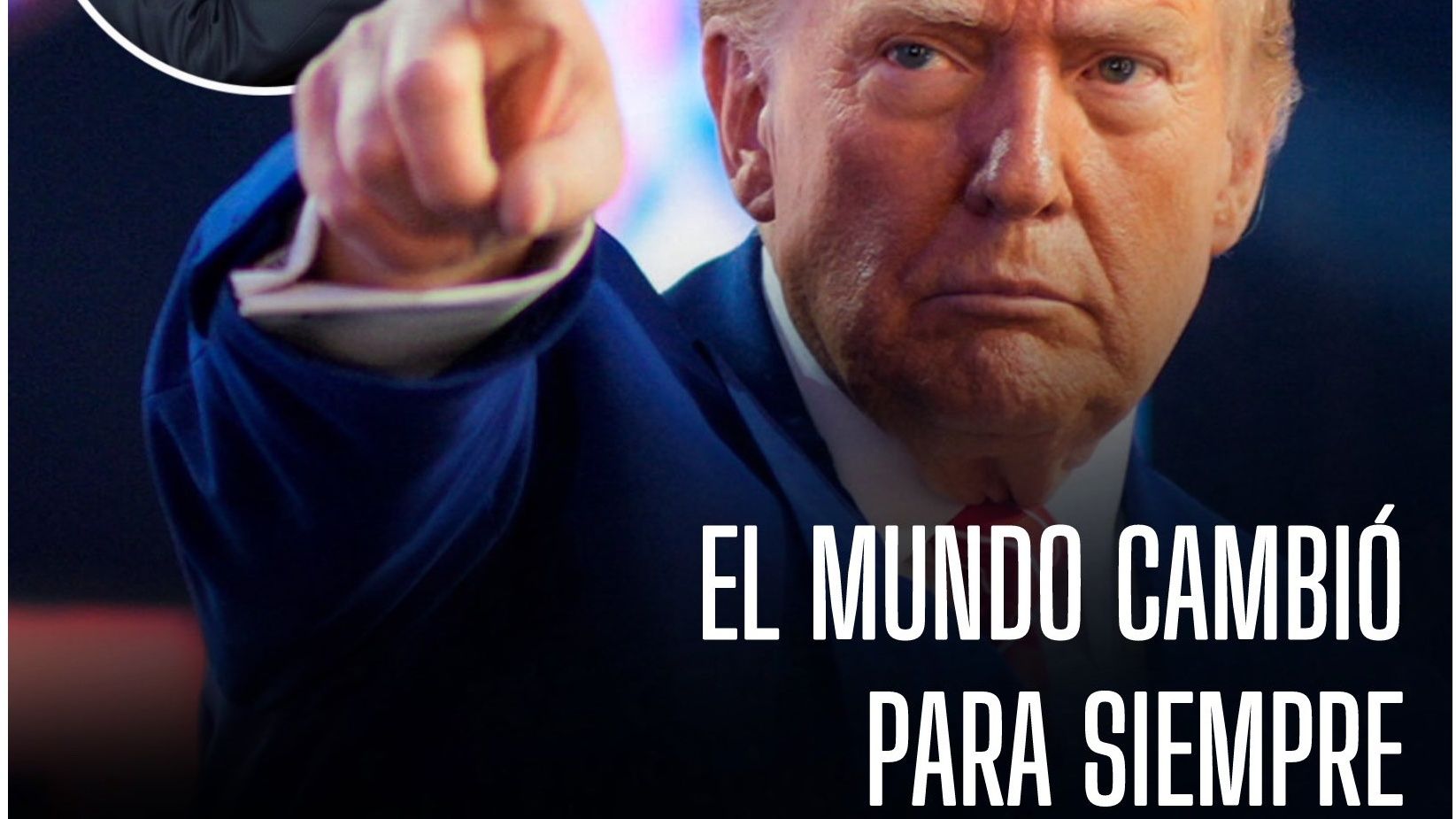
The capture of Venezuelan President Nicolás Maduro on January 3, 2026, by U.S. forces marked a turning point not only in Venezuela's political history but in the perception of political risk throughout Latin America. This seismic event, along with other geopolitical tensions in the region, catalyzed a fascinating phenomenon: the massive acceleration in the adoption of cryptocurrencies as a mechanism for financial protection against political uncertainty.
The relationship between political crisis and crypto adoption
The connection between political instability and cryptocurrency adoption is not new, but it intensified drastically in Latin America during 2025 and early 2026. According to the 2025 Global Crypto Adoption Index by Chainalysis, Latin America experienced 63% year-over-year growth in crypto adoption, becoming the second fastest-growing region globally, surpassed only by Asia-Pacific.
This growth is neither uniform nor random. The countries that suffered the most political turbulence are precisely those leading regional adoption. Brazil ranks fifth globally in crypto adoption, Venezuela 18th, and Argentina 20th, according to the same report. Mexico, despite falling to 23rd in the global ranking, maintains significant transaction volumes, especially in crypto remittances that exceeded $6.5 billion in 2024.
The key question is: why does political instability drive cryptocurrency adoption? The answer lies in the very nature of these digital assets and what they represent in contexts of uncertainty.
Cryptocurrencies: Borderless assets in times of crisis
When disruptive geopolitical events like the military intervention in Venezuela occur, citizens face a series of immediate threats to their wealth: frozen bank accounts, capital controls that limit access to foreign currency, government confiscations, the collapse of local currency value, and severe restrictions on international transfers.
Cryptocurrencies offer unique features that make them especially attractive in these scenarios:
Absolute portability: Unlike cash or precious metals, cryptocurrencies can move instantly across borders without physical transport. A Venezuelan who needs to flee their country only needs to remember a 12 or 24-word seed phrase to access their wealth from anywhere in the world.
Censorship resistance: No government can freeze or confiscate cryptocurrencies stored in private wallets, unlike traditional bank accounts that can be blocked by a judicial or administrative order.
24/7 global access: Crypto markets operate continuously, allowing users to move or liquidate their assets at any time, even during crises that shut down traditional markets.
Protection against inflation: Stablecoins pegged to the dollar offer a way to maintain value when local currencies collapse, as happened with the Venezuelan bolivar, which lost more than 70% of its value in less than a year.
The Venezuelan case: A laboratory for crypto-geopolitics
The Venezuelan situation offers the clearest example of how geopolitical events can radically transform crypto adoption. In the hours following Maduro's capture, Bitcoin experienced a momentary drop below $90,000, reflecting initial market uncertainty. However, deeper analysis reveals a different story.
According to Adarsh, a market analyst cited by BeInCrypto, Bitcoin could experience a jump as a "safe haven" (digital gold) during the chaos. "If cryptocurrencies are used to evade sanctions, the United States could tighten regulations. Prepare for high volatility," he warned.
The Venezuelan crisis accelerated several trends simultaneously:
Increase in crypto remittance volume: Venezuelan families abroad intensified sending economic aid through cryptocurrencies, avoiding traditional banking systems that could be disrupted by the political crisis.
Mass migration to stablecoins: Venezuelans who still held bolivars quickly converted them to USDT or other stablecoins to protect their value against uncertainty regarding the future of the national currency. As the name implies, in the case of stablecoins, cryptocurrency prices remain stable, pegged to the U.S. dollar, which provides additional security in cases of extreme inflation.
Increase in the use of P2P platforms: Peer-to-peer exchange platforms saw an exponential increase in activity, as they offer greater privacy and resilience than centralized exchanges.
Accelerated adoption of private wallets: More users migrated their assets from centralized exchanges to self-custody wallets, reducing their exposure to potential government interventions.
Data from TRM Labs confirms this trend: Venezuela recorded one of the highest growth rates in crypto adoption globally, with approximately 38% of crypto activity involving P2P platforms, the highest proportion of any country in the region.
Contagion effects: Regional concern
Perhaps the most significant impact of the U.S. intervention in Venezuela is not in the country itself, but in how it altered risk perceptions throughout Latin America. As noted in a CNN report, many Cubans are asking: "Are we next?"
This question is not limited to Cuba. In Nicaragua, where the government of Daniel Ortega maintains tensions with the United States, there were reports of increased crypto adoption. Even in countries with more stable governments, citizens concerned about the possibility of future crises began diversifying their savings into digital assets.
A Yale University professor, cited by CNN, described Trump's use of the Monroe Doctrine as "very concerning" and a sign that the United States intends to take a more forceful stance on the use of military force in Latin America. This perception fueled what some analysts call the "Latin American geopolitical risk premium" in crypto adoption. Staying informed about cryptocurrency news has never been more important in the region.
Gold vs. Bitcoin: Competition for safe-haven status

The Venezuelan crisis also reignited the debate over whether Bitcoin can function as a true safe-haven asset similar to gold. According to an analysis by MUNDIARIO, while gold responded to the crisis by reaffirming its historical role as a refuge, Bitcoin showed "relative maturity, but also its limits."
Gold remained at high levels during the crisis, consolidating a trend of strength linked to international tensions. Bitcoin, on the other hand, experienced volatility but did not collapse completely, indicating "a foundation of trust more solid than in past cycles," but it did not take off as an undisputed safe-haven asset either.
This ambiguity of Bitcoin as a safe-haven asset is important for understanding crypto adoption in geopolitical contexts. For many Latin Americans, cryptocurrencies are not necessarily an alternative to gold or other traditional assets, but a complement in a diversification strategy designed to protect against multiple risk situations. Are you interested in the price of Bitcoin? Check out the article "Bitcoin 2025: Can it still go much higher?" for some perspectives and stay tuned, the 2026 update is coming soon!
Regulatory implications and the sanctions dilemma
The Venezuelan crisis highlighted one of the most complex dilemmas of the crypto era: how can governments regulate cryptocurrencies when they can be used both to empower oppressed citizens and to evade international sanctions?
According to the Atlantic Council, the Venezuelan state-owned oil company PDVSA began accepting payments in USDT in 2024, allowing the Maduro regime to bypass U.S. financial restrictions. This strategy reflects tactics employed by sanctioned regimes like Iran and Russia, highlighting the utility of cryptocurrencies as a tool for sanctions evasion.
In response, the United States began to tighten oversight of crypto operations linked to Venezuela. However, as TRM Labs noted, "Venezuela's crypto ecosystem is driven by economic necessity rather than illicit activity, with stablecoins serving as a lifeline for millions of citizens."
This duality (crypto as a tool for economic survival and a vector for sanctions evasion) greatly complicates global regulatory efforts. Any attempt to restrict Venezuelan citizens' access to cryptocurrencies would inevitably harm millions of innocent people who rely on these assets for their daily survival.
The role of exchanges and platforms
Cryptocurrency exchanges and crypto service platforms find themselves in a unique and often uncomfortable position amidst these geopolitical tensions. They must balance providing services to legitimate users with complying with international sanctions and local regulations.
Binance, one of the most used exchanges in Latin America, had to restrict services linked to sanctioned banks and individuals in Venezuela. However, millions of Venezuelans still rely on the platform for their daily transactions. This situation illustrates the delicate balance these companies must maintain.
Smaller and decentralized platforms gained popularity precisely because they offer greater resistance to censorship and are not subject to the same regulatory pressures as centralized exchanges. However, they also present greater risks for inexperienced users and offer fewer protections in case of fraud. Check out the article "What is the best crypto exchange for beginners?" on the WEEX Wiki for more information about your exchange options in Latam.
Education and crypto literacy: An urgent need
The rapid adoption of cryptocurrencies driven by geopolitical crises created a significant challenge: many new users lack the education necessary to use these assets safely and effectively.
As noted by the director of the cryptocurrency course at the Andrés Bello Catholic University in Caracas: "In an economy as distorted as ours, common sense can be more valuable than capital." This observation highlights the critical importance of financial and technical education.
Organizations like Mujeres en Crypto and ecosystem leaders like Rodolfo Andragnes, founder of ONG Bitcoin Argentina, intensified their educational efforts, recognizing that sustainable adoption requires informed users who understand both the opportunities and the risks of cryptocurrencies.
Conclusion: A new era of individual financial sovereignty
The capture of Nicolás Maduro and the resulting geopolitical turbulence accelerated a transformation that was already underway: the emergence of cryptocurrencies as a fundamental tool for individual financial sovereignty in Latin America.
In a context of political instability, where governments can fall, currencies can collapse, and borders can close overnight, cryptocurrencies offer something traditional systems cannot: true financial autonomy.
This adoption is not without risks. The volatility of some crypto assets, security challenges, the possibility of fraud, and technical complexity are all factors that must be taken into account. However, for millions of Latin Americans, these risks are nothing compared to the certainty of loss represented by hyperinflation, capital controls, and government confiscation.
The Venezuelan crisis of 2026 will be remembered not only as a moment of geopolitical turbulence, but as the catalyst that accelerated Latin America's transition into a new era of decentralized digital finance. In this new era, individual financial sovereignty is not a luxury or an ideological option, but a practical necessity for survival. Are you ready to enter the crypto world? Download the WEEX app and get ready to take your first steps.
Disclaimer
WEEX and its affiliates provide digital asset exchange services, including derivatives trading and margin trading, only where it is legal to do so and for eligible users. All content is general information and does not constitute financial advice. You should seek financial advice before trading. Cryptocurrency trading is a high-risk activity and can result in the total loss of your assets. By using WEEX services, you accept all related risks and terms. Never invest more than you can afford to lose. Consult our Terms of Use and our Risk Disclosure for full details.