From Cold Wallets to Hot Wallets: How to Choose the Right Cryptocurrency Wallet for You?

The global financial landscape has witnessed tremendous development since the spread of the internet. Today, it is possible to conduct any financial or commercial transaction across this network quickly and easily using modern electronic payment methods. This development has not stopped there; it has gone much further with the emergence of virtual or cryptocurrencies and distributed ledger technologies, which have revolutionized the traditional concept of currency and money.
The phenomenon of virtual currencies is a global one, evolving rapidly beyond the control of states and central banks. Although no government has yet adopted any virtual currency as an official tender, they represent value within a community of interested individuals who use them as a medium of exchange, even if this community does not necessarily occupy a single geographical or political unit.
In light of these developments, remaining neutral is no longer appropriate. Wisdom today dictates moving past indifference by understanding the nature, characteristics, and types of these currencies to leverage the benefits they offer, or at least to mitigate their risks, and to choose the appropriate cryptocurrency wallet.
Cryptocurrency
It is a purely digital representation of virtual value that has no physical existence in the real world. It is not issued, guaranteed, regulated, or monitored by any government entity. It is stored in electronic financial wallets and traded among users, as it possesses the functions of money. Dear reader, here is a guide to choosing the best crypto trading strategy.
Reasons for the Emergence and Spread of Cryptocurrencies
The global financial crisis and the bailouts of major financial institutions renewed doubts in some quarters regarding the central banks' monopoly on currency issuance. This skepticism led to the emergence of Bitcoin and other crypto assets, which challenged the model of state-backed currencies and the dominant role of central banks and traditional institutions in the financial system.
The spread of cryptocurrencies, led by Bitcoin, as we see today, would not have happened without the global financial crisis, the decline in many people's trust in their national currencies or international currencies—particularly the dollar—and the decline in profitable investment opportunities as interest rates fell to zero in most countries. This fueled the drive to speculate in assets that generate high returns, such as gold. Consequently, Bitcoin and other virtual currencies represented an ideal alternative for speculators seeking high returns who were willing to bear the risk.
The Value of Cryptocurrencies
Cryptocurrencies derive their market value from the ability to exchange them for other currencies, use them for payments, and use them as a store of value. Unlike the value inherent in fiat currencies, which is based on monetary policy and their status as legal tender, the value of crypto assets is based solely on the expectation that others will assign value to them and use them.
How Does Bitcoin Work?
Each Bitcoin is defined digitally by a long string of code called a "hash" (or serial number). Each user possesses a "wallet" where their Bitcoins are stored. This wallet contains its own serial identifier, called a "private key," which determines that a specific Bitcoin is owned by the specific owner for that period of time. When a transaction is executed between two parties, the transaction is given its own serial number, called a "nonce," which is a random number used only once in any cryptographic connection.
The private keys for each transaction will remain on the Bitcoin line of code at all times, creating a chain that defines them to the exclusion of others. If hundreds of transactions are made every minute, the network calculates all the chains being added, as the structure relies on mathematical calculations; therefore, it is impossible to duplicate or predict the path of the chain. A vast network of mining computers communicates with each other to confirm that the transactions they are working on match the hundreds of other transactions being processed at that moment. As more transactions occur, the chains become longer, and Bitcoin transactions theoretically become more secure, with verification taking only about ten minutes.
However, the situation has now evolved, and you can trade using artificial intelligence. To learn about this, dear reader, visit the WEEX platform through the article: How to Use Artificial Intelligence in Cryptocurrency Trading?
Types of Bitcoin Wallets
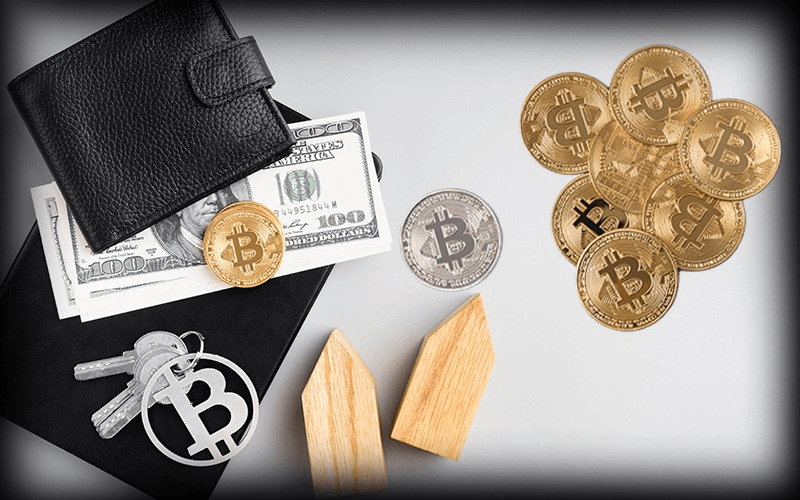
Bitcoin users manage their Bitcoin addresses using a digital wallet. Wallets allow users to send Bitcoins, request payment, calculate the total balance of used addresses, and generate new addresses as needed. Many wallets include precautions to keep private keys secret, for example, by encrypting wallet data with a password or by requiring two-factor authentication logins.
But before trading digital currencies, dear user, you must determine which wallet you will use: a cold wallet, a hot wallet, or both?
To understand the reason behind these names, we will clarify: these wallets are named based on whether they are connected to the internet or not.
1. Cold Wallet:
This is a wallet that is not connected to the internet. It is also known as a hardware wallet, meaning it is a physical device that keeps digital currencies in a completely offline state.
When should you use a cold wallet?
Using a cold wallet is the best option if you plan to buy digital currency and intend to hold it for a long period of time. In this wallet, users need to transfer currencies between several devices connected and not connected to the internet.
Why are cold wallets considered the best option?
Because when used, security keys are kept without the need for an internet connection, which reduces the likelihood of them being hacked.
Is there any downside to cold wallets?
Yes; you may lose all your digital currency holdings if the wallet is lost or broken, as there is no backup for it.
What are the characteristics of cold wallets?
A. Completely disconnected from the internet.
B. You can only access them through the physical hardware device.
C. They require a long time to complete transactions.
2. Hot Wallet:
This is a wallet connected to the internet, and it can be accessed quickly via the internet on the user's personal computer or smartphone, which facilitates digital currency transactions, whether buying or selling, between traders. They are also known as software wallets.
When should you use a hot wallet?
If you are a user who opens your account daily and frequently, this wallet is more suitable for you because it is designed for daily transactions.
Why are hot wallets considered dangerous? Or what are the risks of hot wallets?
Because they are among the wallets most susceptible to hacking and breaches, and the reason for this is their connection to the internet. Since the nature of blockchain is to hide the identity of users, it is difficult to track or identify the hacker.
What are the characteristics and features of hot wallets?
A. Fast transactions due to their internet connection.
B. Highly susceptible to hacking.
C. Their internet connection (a double-edged sword).
Characteristics of Cryptocurrencies
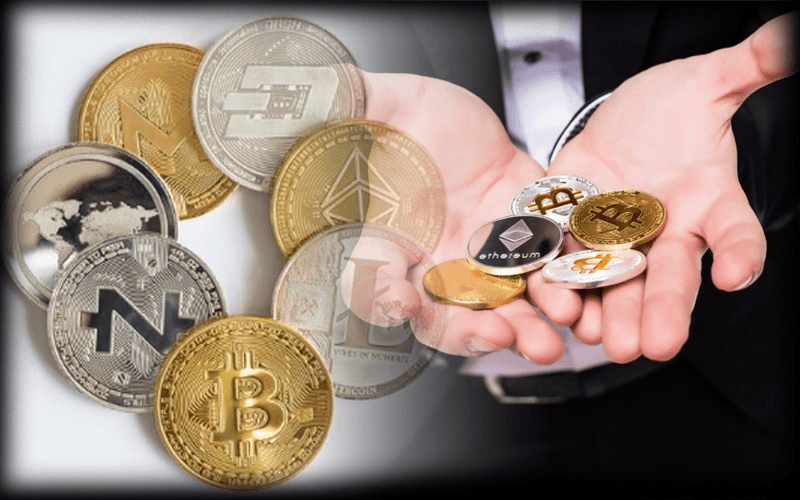
The characteristics of cryptocurrencies have been the arguments relied upon by both critics and advocates of using virtual currencies. These characteristics are manifested in their flexibility, universality, privacy, and security.
1. Flexibility:
This includes ease, speed, and low costs. Commercial exchange operations using virtual currency are even easier than dealing with credit cards, as they are carried out through an electronic wallet that can exist as computer software or a mobile application (cold wallets and hot wallets). In this process, there is no third party between the seller and the buyer, which reduces the time, fees, and costs of financial operations.
A user of this currency will not pay any transport or transfer fees like those usually charged by banks and credit card companies. There will be no need for an intermediary between the client and the merchant to transfer money because the currency itself did not move; rather, the currency symbol left the buyer's wallet and entered the seller's wallet. This process takes place without an intermediary and is called peer-to-peer (P2P). Furthermore, there are no transfer fees, nor are there costs for currency exchange rate differences or other costs imposed through traditional channels of transferring money.
2. Universality:
Virtual currencies enjoy an important advantage: the ability to transfer them at any time to anywhere in the world, with complete privacy, without passing through any regulatory body, and without bearing currency exchange rate differences. Virtual money has an international character that is not restricted by geographical or temporal boundaries.
They can be treated as if they were a local currency because they are available globally. No country can ban them because they are not subject to its control in the first place. Consequently, no one can seize these transactions or transfers, nor can they be frozen, confiscated, or subjected to other risks that transfers in traditional currencies might face if they are suspected of being used for illegal transactions, because the owner is the only one with the authority to determine the mechanism, location, and type of use.
3. Transparency and Public Transactions:
All buying and selling operations are public and known to all users without knowing the identities of the traders, but with full knowledge of the volume of transactions and the timing of their execution.
Blockchain technology stores every operation performed. If someone owns an electronic wallet, anyone else can know the number of virtual currency units the owner of this wallet has and the number of transactions made through it, as everyone can see the movement of the currency between wallets with complete transparency. However, at the same time, no one will be able to know the identity of the owner, which means that all participants acknowledge the existence of this money and the transfer of its ownership.
4. Privacy and Confidentiality:
Virtual currency is described as decentralized in most cases, meaning there is no specific body responsible for issuing and guaranteeing it. It does not have a serial number, cannot be tracked, and there is no intermediary party through which the financial transaction data passes. Furthermore, there is no need to exchange any personal information. All these features make the idea of dealing in cryptocurrency popular among privacy advocates and those calling for confidentiality.
While confidentiality and privacy are advantages, they also reflect some negatives for the currency, as they provide some ease for suspicious and illegal operations carried out over the internet. The privacy provided by this currency has made it a target for money laundering and the sale of stolen and prohibited products, making it difficult for security agencies to track the source of the currency.
5. Security:
Security is achieved in two ways: on one hand, virtual currency is immune to ordinary financial crimes such as theft and destruction due to its lack of physical existence. On the other hand, the technology used by virtual currency is relatively secure, as it usually adopts a technology called "Blockchain."
This concept involves bundles of information stacked on top of each other, such that every piece of information passes through a public and complex review system, requiring that any change in any block necessitates a change in all the blocks that follow it. This makes hacking and pirating this information very difficult.
Challenges of Using Cryptocurrencies

Challenges of using cryptocurrencies
The problems and challenges of virtual currency began to appear from the beginning of its inception, and these problems stem from its characteristics. Despite long-term expectations about the potential of cryptocurrencies and the underlying blockchain technology to bring about economic and social change, there are still several challenges in using them, including:
1. Lack of Central Authority and Clear Administrative Infrastructure:
Cryptocurrency platforms often operate in an unclear regulatory environment, leading to price volatility and a lack of clarity regarding legal status. The absence of central control over the quantity and price of cryptocurrencies means they are primarily subject to market dynamics. Bitcoin has witnessed noticeable volatility recently. You can read about this in the article on the WEEX platform titled What is the Future of Bitcoin?
2. Security and Integrity of Cryptocurrencies and Digital Platforms:
Issuing currencies in a decentralized manner means there is no entity that guarantees these assets; therefore, their acceptance depends entirely on the trust of traders. Storing money and using it in transactions over the internet has the effect of transferring the responsibility for securing money from the bank to the owner, who must be able to navigate the electronic environment safely, be aware of potential threats, and be able to ensure sufficient software protection against viruses, fraud, and intrusion.
3. Implementation of Monetary Policy:
Cryptocurrencies can pose challenges to central banks if they affect their ability to monitor the money supply and, consequently, to implement monetary policy. In other words, if central bank money no longer defines the unit of account for most economic activities, the monetary policy of central banks will become irrelevant.
4. Novelty and Technological Advancement:
Technological advancement requires the issuance of new types of virtual currencies that surpass their predecessors in modernity and development. Unlike the traditional principle in money that bad money drives out good money, the opposite premise prevails in virtual currencies, where the more advanced virtual currency replaces and supersedes the older one.
The question that arises is: how does one choose between cold and hot wallets, and when should this choice be made?
Choosing Between Cold and Hot Wallets
Accessing hot wallets seems very easy, while cold wallets offer security and reliability. Both types have a number of attractive characteristics, but here, dear reader, I hear you asking if there is a way to balance the features of a hot wallet with the security of a cold wallet in a way that guarantees your peace of mind?
In short, based on the above, we advise you to use a cold wallet to store digital currencies that you will hold for the long term, while choosing a hot wallet to hold currencies you want to trade daily so they are immediately at hand.
Do not forget, dear reader, that there are a number of things to consider when investing in digital currencies. Therefore, it is logical to have a hot wallet connected to the internet where you keep a limited number of currencies for daily trading, in addition to using a cold wallet for security and storing the bulk of your digital currencies, which are difficult for hackers to access.
Disclaimer
"The WEEX platform and its affiliates provide digital asset trading services, including derivatives and margin trading, only where legal and for qualified users. All content is general information, not financial advice—please seek independent advice before trading. Cryptocurrency trading involves high risks and may lead to a total loss. By using WEEX services, you accept all relevant risks and terms."
"Never invest more than you can afford to lose. Review our Terms of Use and Risk Disclosure for more details."