
- Buy Crypto
- Markets
 Futures
- Spot
- Copy Trade
- Earn
- More
South Korea’s Election Sparks Momentum For Bitcoin ETF Approval
By: bitcoin ethereum news|2025/05/15 11:00:10
0
Share
According to Ki Young Ju, all three South Korean presidential candidates support Bitcoin ETFs and institutional crypto investment. Political support may force regulators to approve spot Bitcoin ETFs after all the delays. The Financial Services Commission may come under pressure to revise crypto laws as election pressure builds. Ki Young Ju, the CEO of CryptoQuant, said on May 14 that all three major South Korean presidential candidates support spot Bitcoin ETFs and bigger institutional crypto investment. His message shared on X, signals a growing alignment between political leadership and crypto market demands. All three major South Korean presidential candidates support #Bitcoin ETFs and institutional investment. Currently, Bitcoin ETFs and institutional investments are banned in Korea. 100% volume comes from retail. pic.twitter.com/hL6cKci5VK — Ki Young Ju (@ki_young_ju) May 14, 2025 His endorsement adds weight to ongoing discussions about regulatory change, especially as South Korea’s current laws prevent the approval of spot Bitcoin ETFs. The Financial Services Commission (FSC) has long maintained that cryptocurrencies do not have the necessary legal basis for ETF approval. On the other hand, if leading candidates agree, the process of changing these limits could go faster. Presidential Race Could Redefine Crypto Policy Kim Moon-soo of the Power Party, Lee Jae-myung of the Democratic Party, and Lee Jun-seok from the New Reform Party have openly supported spot Bitcoin ETFs. They suggest that regulated crypto products are an important part of financial innovation. Kim Moon-soo said he will add Bitcoin ETFs to his campaign plans, highlighting digital competitiveness for the future. Lee Jae-myung, Democratic Party leader, said today’s economic concerns are not about a generation’s shortcomings but are deeper structural problems. At the same time, Lee Jun-seok expressed concerns about regulations being slow, saying South Korea needs to stay strong in the global crypto scene. Despite high domestic demand for digital assets, regulatory opposition has held back their growth. Because all three frontrunners are backing ETFs, it is likely that policy will change after the election. The crypto community in South Korea has a significant influence. According to Point Daily, more than 16 million citizens own crypto trading accounts, which is more than a third of the voting populace. The combined market value of cryptocurrencies in South Korea is over 2,600 trillion won, almost equal to the overall KOSPI capitalization. Presidential candidates seem to see the increasing electoral strength of digital asset investors. Presently, campaign promises are tailored to this group’s key worries, like ETF availability, open markets, and building trust with institutions. FSC Faces Pressure to Modernize Crypto Laws The FSC has traditionally been reluctant to accept ETF applications for physical crypto assets. Although limited approval has been granted to derivatives-based crypto ETFs, spot products are still inaccessible as the Bitcoin classification remains unclear from a legal aspect. If the new administration finds itself in tandem with the campaign promises, the FSC will have no option but to rethink its stance. Analysts believe that early steps might be legal revisions to classify cryptocurrencies as suitable underlining assets for the establishment of ETFs. That step would open doors to regulated modes of investment for both retailers and institutions. The timing also matters. The global ETF markets are rapidly growing. Spot Bitcoin ETFs were approved by U.S. regulators in 2024, and their success has set the bar globally. Brenda is a writer with three years of experience specializing in cryptocurrency, artificial intelligence and emerging technologies. She graduated from the University of Mombasa with a degree in Psychology. She has worked at Cryptopolitan and Blockchain Reporter. Source: https://blockchainreporter.net/south-korea-election-sparks-bitcoin-etf/
You may also like

Particle Founder: The entrepreneurial insights I have gained the most from in the past year
Stop lean startup, stop lightning entrepreneurship, and think carefully about what your product aspirations are.

Huang Renxun's latest podcast transcript: The future of Nvidia, the development of embodied intelligence and agents, the explosion of inference demand, and the public relations crisis of artificial intelligence
The competition in the future is not just about whose model is larger or whose computing power is stronger, but also about who understands the industry better, who can embed AI more deeply into real processes, and who can organize these capabilities into a runnable and scalable system.

OKX Ventures Research Report: AI Agent Economic Infrastructure Research Report (Part 1)
The existing infrastructure is hostile to the Agent economy. Agents can think and act independently at the "capability level," but at the "economic level," they are still locked into infrastructure designed for humans.

The migration of settlement rights: B18 and the institutional starting point of on-chain banks
In the traditional system, banks decide the settlement; in the on-chain system, code begins to take over this responsibility.

From Tencent and Circle: Looking at the Simple and Difficult Questions of Investment
The AI narrative continues to ferment, but the recent performance of related stocks varies, with some in the midst of summer and others as if in winter.

The second half of stablecoins no longer belongs to the crypto circle
What Coinbase doesn't want, Mastercard is eager to buy.

Cursor "Shell" Kimi Controversy Reversed: From Copyright Infringement Allegations to Authorized Collaboration, China's Open Source Model Once Again Becomes a Global AI Foundation
Cursor was accused of being based on Kimi K2.5, which sparked controversy, and was later confirmed to be compliant through Fireworks AI due diligence.

The Real Reason Tokens Don't Sell: 90% of Crypto Projects Overlook Investor Relations
Provide an Investor Relations Best Practices Guide for Crypto Projects.

Is the income of pump.fun real, earning a million dollars a day despite the market downturn?
If it can really earn this much, what is the reason for the low price of $PUMP?

The real reason why tokens are not selling: 90% of crypto projects neglect investor relations
Investor Relations Practice Guide for Cryptocurrency Projects.

Who is the true winner of the "Tokenization" narrative?
Virtually everyone benefits, but the reason for the benefit, the timing, and the underlying logic are completely different.

Moss: The Era of AI-Traded by Anyone | Project Introduction
AI Trading Agent is rapidly growing its infrastructure.

Chip Smuggling Case Exposes Regulatory Loophole | Rewire News Evening Update
AI chips have become a strategic asset more sensitive than missiles

How a Structured AI Crypto Trading Bot Won at the WEEX Hackathon
Ritmex demonstrates how disciplined risk control and structured signals can make an AI crypto trading bot more stable and reliable on WEEX, highlighting the importance of combining execution discipline with scalable AI trading systems.

Old Indicator Fails, Three Major New Signals Emerge: BTC True Bottom May Still Be Below $60K
When the grocery shopping auntie on the subway, or Tony the hairdresser, start asking you about BTC, crypto, and cryptocurrency investments, selling immediately will be the only best option.

Meeting OpenClaw Founder at a Hackathon: What Else Can Lobsters Do?
Imperial College London MetaGame: AI Agent × Web3 Landing Three Major Directions.
Huang Renxun's Latest Podcast Transcript: NVIDIA's Future, Embodied Intelligence and Agent Development, Soaring Demand for Inferencing, and AI's PR Crisis
The future of competition is not only about whose model is bigger, whose computing power is stronger, but also about who understands the industry better, who can more deeply integrate AI into real processes, and who can organize these capabilities into a set of executable, scalable systems
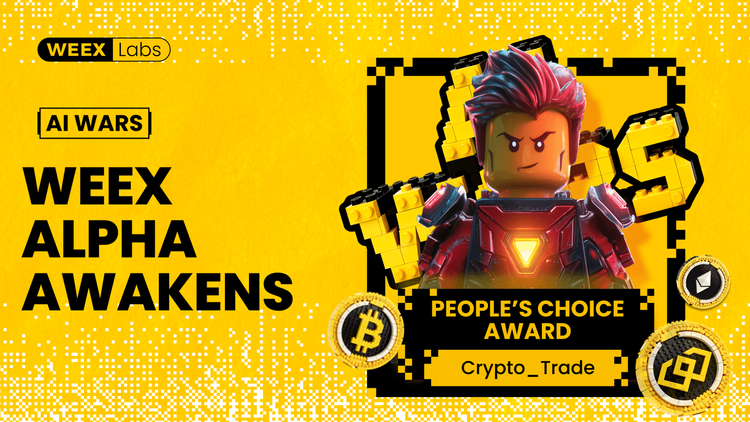
How a Structured AI Crypto Trading Bot Won at the WEEX Hackathon
Crypto_Trade shows how structured inputs and controlled adaptability can build a more stable and reliable AI crypto trading bot within the WEEX AI Trading Hackathon, highlighting a practical path toward scalable AI trading systems.
Particle Founder: The entrepreneurial insights I have gained the most from in the past year
Stop lean startup, stop lightning entrepreneurship, and think carefully about what your product aspirations are.
Huang Renxun's latest podcast transcript: The future of Nvidia, the development of embodied intelligence and agents, the explosion of inference demand, and the public relations crisis of artificial intelligence
The competition in the future is not just about whose model is larger or whose computing power is stronger, but also about who understands the industry better, who can embed AI more deeply into real processes, and who can organize these capabilities into a runnable and scalable system.
OKX Ventures Research Report: AI Agent Economic Infrastructure Research Report (Part 1)
The existing infrastructure is hostile to the Agent economy. Agents can think and act independently at the "capability level," but at the "economic level," they are still locked into infrastructure designed for humans.
The migration of settlement rights: B18 and the institutional starting point of on-chain banks
In the traditional system, banks decide the settlement; in the on-chain system, code begins to take over this responsibility.
From Tencent and Circle: Looking at the Simple and Difficult Questions of Investment
The AI narrative continues to ferment, but the recent performance of related stocks varies, with some in the midst of summer and others as if in winter.
The second half of stablecoins no longer belongs to the crypto circle
What Coinbase doesn't want, Mastercard is eager to buy.


 App
App