
- Buy Crypto
- Markets
 Futures
- Spot
- Copy Trade
- Earn
- More
Japan’s carmakers are expecting $19 billion in losses from US tariffs
By: cryptosheadlines|2025/05/15 12:30:08
0
Share
Airdrop Is Live CaryptosHeadlines Media Has Launched Its Native Token CHT. Airdrop Is Live For Everyone, Claim Instant 5000 CHT Tokens Worth Of $50 USDT. Join the Airdrop at the official website, CryptosHeadlinesToken.com Japan’s biggest carmakers expect to lose more than $19 billion after the tariffs that United States President Donald Trump placed on imported vehicles and parts sent shockwaves through the auto industry.The industry’s leading brands say the duties will squeeze financial performance this year and beyond. Some firms have even stopped giving guidance while they recalculate the cost of Washington’s changing policies and consider whether to shift future work away from North America.Toyota Motor Corp., the world’s largest carmaker, faces the steepest blow. The company told investors last week that its operating income will take a ¥180 billion ($1.2 billion) hit in April and May. Bloomberg Intelligence says the total damage in the fiscal year that ends next March could reach $10.7 billion, while Pelham Smithers analyst Julie Boote puts the range between $5.4 billion and $6.8 billion.Nissan Motor Co. and Honda Motor Co. each put the loss at about $3 billion. Subaru Corp., which brings roughly half of the cars it sells in the United States across the Pacific, withheld annual guidance after warning of a $2.5 billion dent. Mazda Motor Corp. also skipped a full-year outlook.Most vehicles that enter the United States have faced a 25 percent tariff since 3 April. Most parts crossed the same threshold on 3 May. Executive orders block the duties from doubling up, yet analysts say the levies will still add several thousand dollars to a new car bill.The United States is the single biggest market for Japan’s auto majors, many of which use factories in Mexico and Canada and then ship finished vehicles over the border. The new tariffs make that long-running model costly, even unworkable, and leave managers studying how to rebuild supply chains fast enough to avoid the charge.Automakers are putting their hopes on trade talksNegotiations between Tokyo and Washington are expected to speed up later this month, and Prime Minister Shigeru Ishiba has pledged not to sign any deal that fails to tackle auto duties, a sector he calls vital to the nation’s economy. While they wait, companies are already changing course.Honda this week delayed by two years a C$15 billion ($11 billion) plan to set up an electric-vehicle supply chain in Canada, which would have included a plant able to turn out 240,000 cars a year. The firm has begun moving production of the hybrid Civic from Japan to the United States as well. Around 40 percent of the 1.4 million cars Honda sold in America in 2024 were imported, Bloomberg Intelligence data show.Subaru says all spending plans, including programs to develop electric vehicles, are now under review. Nissan has paused U.S. orders for sport-utility vehicles built in Mexico, and Mazda is ending shipments to Canada of one model made at the Alabama joint venture it runs with Toyota.Toyota for its part has kept production steady so far. Chief Executive Koji Sato told reporters last week that the group will look at raising U.S. output over the medium to long term rather than making sudden moves.The levy is especially hard on Nissan, which is already fighting its worst crisis in 25 years. Management has announced 20,000 job cuts and the closure of seven plants worldwide. Even with those deep cuts, the company still needs fresh cash after merger talks with Honda failed earlier this year.“Nissan’s plight could have been minimized if it had taken these steps sooner,” said Bloomberg Intelligence senior auto analyst Tatsuo Yoshida. “The impact of these measures, compared to what other carmakers are doing or even what Nissan has done in the past, is unclear.”Analysts warn that every month of uncertainty risks slowing new investment, eroding skilled jobs, and pushing research funds toward regions that still trade freely with few policy shocks or barriers.KEY Difference Wire: the secret tool crypto projects use to get guaranteed media coverageSource link
You may also like

The second half of stablecoins no longer belongs to the crypto circle
What Coinbase doesn't want, Mastercard is eager to buy.

Cursor "Shell" Kimi Controversy Reversed: From Copyright Infringement Allegations to Authorized Collaboration, China's Open Source Model Once Again Becomes a Global AI Foundation
Cursor was accused of being based on Kimi K2.5, which sparked controversy, and was later confirmed to be compliant through Fireworks AI due diligence.

The Real Reason Tokens Don't Sell: 90% of Crypto Projects Overlook Investor Relations
Provide an Investor Relations Best Practices Guide for Crypto Projects.

Is the income of pump.fun real, earning a million dollars a day despite the market downturn?
If it can really earn this much, what is the reason for the low price of $PUMP?

The real reason why tokens are not selling: 90% of crypto projects neglect investor relations
Investor Relations Practice Guide for Cryptocurrency Projects.

Who is the true winner of the "Tokenization" narrative?
Virtually everyone benefits, but the reason for the benefit, the timing, and the underlying logic are completely different.

Moss: The Era of AI-Traded by Anyone | Project Introduction
AI Trading Agent is rapidly growing its infrastructure.

Chip Smuggling Case Exposes Regulatory Loophole | Rewire News Evening Update
AI chips have become a strategic asset more sensitive than missiles

How a Structured AI Crypto Trading Bot Won at the WEEX Hackathon
Ritmex demonstrates how disciplined risk control and structured signals can make an AI crypto trading bot more stable and reliable on WEEX, highlighting the importance of combining execution discipline with scalable AI trading systems.

Old Indicator Fails, Three Major New Signals Emerge: BTC True Bottom May Still Be Below $60K
When the grocery shopping auntie on the subway, or Tony the hairdresser, start asking you about BTC, crypto, and cryptocurrency investments, selling immediately will be the only best option.

Meeting OpenClaw Founder at a Hackathon: What Else Can Lobsters Do?
Imperial College London MetaGame: AI Agent × Web3 Landing Three Major Directions.
Huang Renxun's Latest Podcast Transcript: NVIDIA's Future, Embodied Intelligence and Agent Development, Soaring Demand for Inferencing, and AI's PR Crisis
The future of competition is not only about whose model is bigger, whose computing power is stronger, but also about who understands the industry better, who can more deeply integrate AI into real processes, and who can organize these capabilities into a set of executable, scalable systems
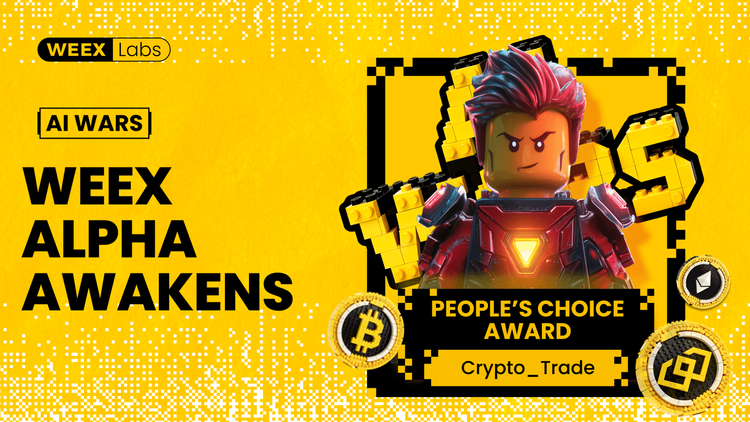
How a Structured AI Crypto Trading Bot Won at the WEEX Hackathon
Crypto_Trade shows how structured inputs and controlled adaptability can build a more stable and reliable AI crypto trading bot within the WEEX AI Trading Hackathon, highlighting a practical path toward scalable AI trading systems.

AI Starts to Devour the Manufacturing Industry | Rewire News Morning Edition
When Bezos starts using AI to buy factories instead of building data centers, it shows that he believes the next wave of AI's value is not inside the box.
When Scaling Meets Speed, Ethereum Foundation Introduces "Hardness" to Safeguard the Base Layer
Hardness is a protocol-level commitment to Ethereum core properties, including censorship resistance, privacy, security, and permissionlessness.
Google, Circle, Stripe Flock Together to Let AI Spend Money: Payment Giants' Joys and Worries in 2026 Q1
The real enemy is no longer each other, but zero cost itself

$100 Billion Factory Purchase: Bezos and Middle Eastern Capital Shift AI Money from Cloud to Shop Floor
Bezos doesn't invest in a new model; he invests in a supply chain.

Xiaomi and MiniMax both unleash their ultimate moves, signaling the start of the Agent Pricing War.
No brand, no marketing, let developers vote with their feet in 8 days
The second half of stablecoins no longer belongs to the crypto circle
What Coinbase doesn't want, Mastercard is eager to buy.
Cursor "Shell" Kimi Controversy Reversed: From Copyright Infringement Allegations to Authorized Collaboration, China's Open Source Model Once Again Becomes a Global AI Foundation
Cursor was accused of being based on Kimi K2.5, which sparked controversy, and was later confirmed to be compliant through Fireworks AI due diligence.
The Real Reason Tokens Don't Sell: 90% of Crypto Projects Overlook Investor Relations
Provide an Investor Relations Best Practices Guide for Crypto Projects.
Is the income of pump.fun real, earning a million dollars a day despite the market downturn?
If it can really earn this much, what is the reason for the low price of $PUMP?
The real reason why tokens are not selling: 90% of crypto projects neglect investor relations
Investor Relations Practice Guide for Cryptocurrency Projects.
Who is the true winner of the "Tokenization" narrative?
Virtually everyone benefits, but the reason for the benefit, the timing, and the underlying logic are completely different.


 App
App