
- Buy Crypto
- Markets
 Futures
- Spot
- Copy Trade
- Earn
- More
Ethereum Foundation Launches Trillion Dollar Security Initiative to Enhance Network Resilience and Onchain Adoption
By: bitcoin ethereum news|2025/05/15 12:00:11
0
Share
The Ethereum Foundation has initiated a groundbreaking program aimed at upgrading the security of its network to foster wider on-chain adoption. Known as the Trillion Dollar Security Initiative, this ambitious plan seeks to enable billions of users to securely manage considerable assets on the blockchain. According to Samczsun from Paradigm, “This initiative is crucial for ensuring Ethereum can safely handle the massive influx of value we anticipate in the future.” Ethereum launches a three-phase security initiative to support on-chain adoption and protect trillions in value, inviting diverse community input. Understanding the Trillion Dollar Security Initiative The Ethereum Foundation’s latest endeavor marks a pivotal moment for the network as it steps towards establishing a robust infrastructure aimed at significant security enhancements. This initiative is divided into three meticulously planned phases, starting with an extensive evaluation of existing security measures. Key areas of focus will include wallet user experience (UX), smart contract tooling, and consensus protocols. The long-term vision is clear: to create an environment where trillions of dollars can securely reside on the Ethereum blockchain. First Phase: Comprehensive Security Assessment During its initial phase, the initiative aims to conduct a thorough analysis of Ethereum’s security features. This action is not merely for improvement; it serves to establish a baseline from which all future developments will originate. By identifying potential vulnerabilities and weak points in the current system, the Ethereum Foundation seeks to build a foundation that institutions and users can trust. With contributions from recognized experts like Mehdi Zerouali and Zach Obront, the project is positioned to leverage industry insights effectively. Implementation and Future Directions Following the assessment, the next phase will be dedicated to implementing essential improvements that directly address the findings from the initial evaluation. Beyond technical upgrades, this phase will emphasize the importance of transparent communication regarding the network’s security standards. The Ethereum Foundation encourages partnerships with diverse organizations, aiming to solidify trust and collaboration within the ecosystem. Enhancing User Experience and Institutional Interest As Ethereum evolves, improving user experience will also be a priority. The ability to seamlessly interact with the network is critical for attracting more users. Currently, significant advancements in Layer 2 solutions are underway. These improvements allow Ethereum-based transactions to be processed more efficiently, using techniques such as “blobs” to optimize data handling. Both user engagement and institutional participation hinge on making transactions faster and less costly. Current Market Dynamics and Institutional Adoption The launch of the Trillion Dollar Security Initiative comes on the heels of Ethereum’s upgrade, Pectra, which has positively influenced ETH’s market perception. Analysts at Bernstein have noted that recent developments make it increasingly challenging to dismiss ETH’s potential. Yet, market fluctuations have raised concerns about institutional adoption. Data from CoinGlass reveals that Ethereum ETFs experienced limited inflows shortly after Pectra’s launch, predominantly from significant players like BlackRock and Grayscale. Community Engagement and Feedback The Ethereum Foundation has actively sought input from community members, as diverse perspectives are essential for a comprehensive security strategy. By fostering an open dialogue with users, developers, and institutional actors, the initiative aims to build a more resilient and adaptive ecosystem. This collaborative approach should enable Ethereum to maintain its competitive edge in the evolving market landscape. Conclusion In summary, the Ethereum Foundation’s Trillion Dollar Security Initiative represents a strategic move towards fortifying the network against future challenges while embracing broader adoption. Through careful planning, community involvement, and a commitment to transparency, Ethereum aims to position itself as a secure platform for the digital economy. As developments unfold, stakeholders can look forward to a more robust and adaptable Ethereum ecosystem. Source: https://en.coinotag.com/ethereum-foundation-launches-trillion-dollar-security-initiative-to-enhance-network-resilience-and-onchain-adoption/
You may also like

The migration of settlement rights: B18 and the institutional starting point of on-chain banks
In the traditional system, banks decide the settlement; in the on-chain system, code begins to take over this responsibility.

From Tencent and Circle: Looking at the Simple and Difficult Questions of Investment
The AI narrative continues to ferment, but the recent performance of related stocks varies, with some in the midst of summer and others as if in winter.

The second half of stablecoins no longer belongs to the crypto circle
What Coinbase doesn't want, Mastercard is eager to buy.

Cursor "Shell" Kimi Controversy Reversed: From Copyright Infringement Allegations to Authorized Collaboration, China's Open Source Model Once Again Becomes a Global AI Foundation
Cursor was accused of being based on Kimi K2.5, which sparked controversy, and was later confirmed to be compliant through Fireworks AI due diligence.

The Real Reason Tokens Don't Sell: 90% of Crypto Projects Overlook Investor Relations
Provide an Investor Relations Best Practices Guide for Crypto Projects.

Is the income of pump.fun real, earning a million dollars a day despite the market downturn?
If it can really earn this much, what is the reason for the low price of $PUMP?

The real reason why tokens are not selling: 90% of crypto projects neglect investor relations
Investor Relations Practice Guide for Cryptocurrency Projects.

Who is the true winner of the "Tokenization" narrative?
Virtually everyone benefits, but the reason for the benefit, the timing, and the underlying logic are completely different.

Moss: The Era of AI-Traded by Anyone | Project Introduction
AI Trading Agent is rapidly growing its infrastructure.

Chip Smuggling Case Exposes Regulatory Loophole | Rewire News Evening Update
AI chips have become a strategic asset more sensitive than missiles

How a Structured AI Crypto Trading Bot Won at the WEEX Hackathon
Ritmex demonstrates how disciplined risk control and structured signals can make an AI crypto trading bot more stable and reliable on WEEX, highlighting the importance of combining execution discipline with scalable AI trading systems.

Old Indicator Fails, Three Major New Signals Emerge: BTC True Bottom May Still Be Below $60K
When the grocery shopping auntie on the subway, or Tony the hairdresser, start asking you about BTC, crypto, and cryptocurrency investments, selling immediately will be the only best option.

Meeting OpenClaw Founder at a Hackathon: What Else Can Lobsters Do?
Imperial College London MetaGame: AI Agent × Web3 Landing Three Major Directions.
Huang Renxun's Latest Podcast Transcript: NVIDIA's Future, Embodied Intelligence and Agent Development, Soaring Demand for Inferencing, and AI's PR Crisis
The future of competition is not only about whose model is bigger, whose computing power is stronger, but also about who understands the industry better, who can more deeply integrate AI into real processes, and who can organize these capabilities into a set of executable, scalable systems
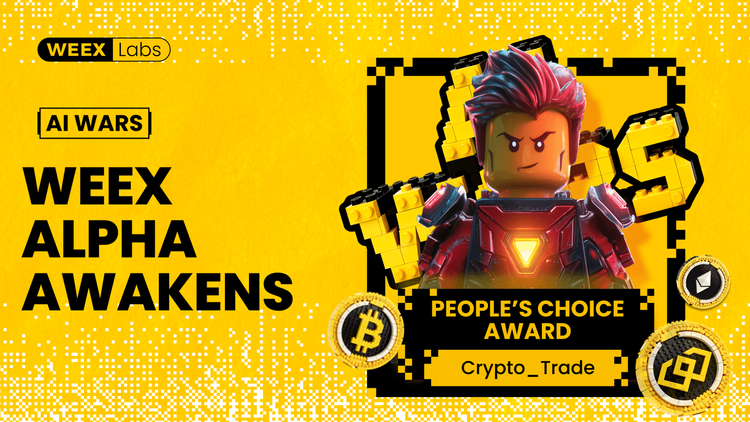
How a Structured AI Crypto Trading Bot Won at the WEEX Hackathon
Crypto_Trade shows how structured inputs and controlled adaptability can build a more stable and reliable AI crypto trading bot within the WEEX AI Trading Hackathon, highlighting a practical path toward scalable AI trading systems.

AI Starts to Devour the Manufacturing Industry | Rewire News Morning Edition
When Bezos starts using AI to buy factories instead of building data centers, it shows that he believes the next wave of AI's value is not inside the box.
When Scaling Meets Speed, Ethereum Foundation Introduces "Hardness" to Safeguard the Base Layer
Hardness is a protocol-level commitment to Ethereum core properties, including censorship resistance, privacy, security, and permissionlessness.
Google, Circle, Stripe Flock Together to Let AI Spend Money: Payment Giants' Joys and Worries in 2026 Q1
The real enemy is no longer each other, but zero cost itself
The migration of settlement rights: B18 and the institutional starting point of on-chain banks
In the traditional system, banks decide the settlement; in the on-chain system, code begins to take over this responsibility.
From Tencent and Circle: Looking at the Simple and Difficult Questions of Investment
The AI narrative continues to ferment, but the recent performance of related stocks varies, with some in the midst of summer and others as if in winter.
The second half of stablecoins no longer belongs to the crypto circle
What Coinbase doesn't want, Mastercard is eager to buy.
Cursor "Shell" Kimi Controversy Reversed: From Copyright Infringement Allegations to Authorized Collaboration, China's Open Source Model Once Again Becomes a Global AI Foundation
Cursor was accused of being based on Kimi K2.5, which sparked controversy, and was later confirmed to be compliant through Fireworks AI due diligence.
The Real Reason Tokens Don't Sell: 90% of Crypto Projects Overlook Investor Relations
Provide an Investor Relations Best Practices Guide for Crypto Projects.
Is the income of pump.fun real, earning a million dollars a day despite the market downturn?
If it can really earn this much, what is the reason for the low price of $PUMP?


 App
App