
Kalshi vs. Polymarket: Which Prediction Market Platform Is Better for You?


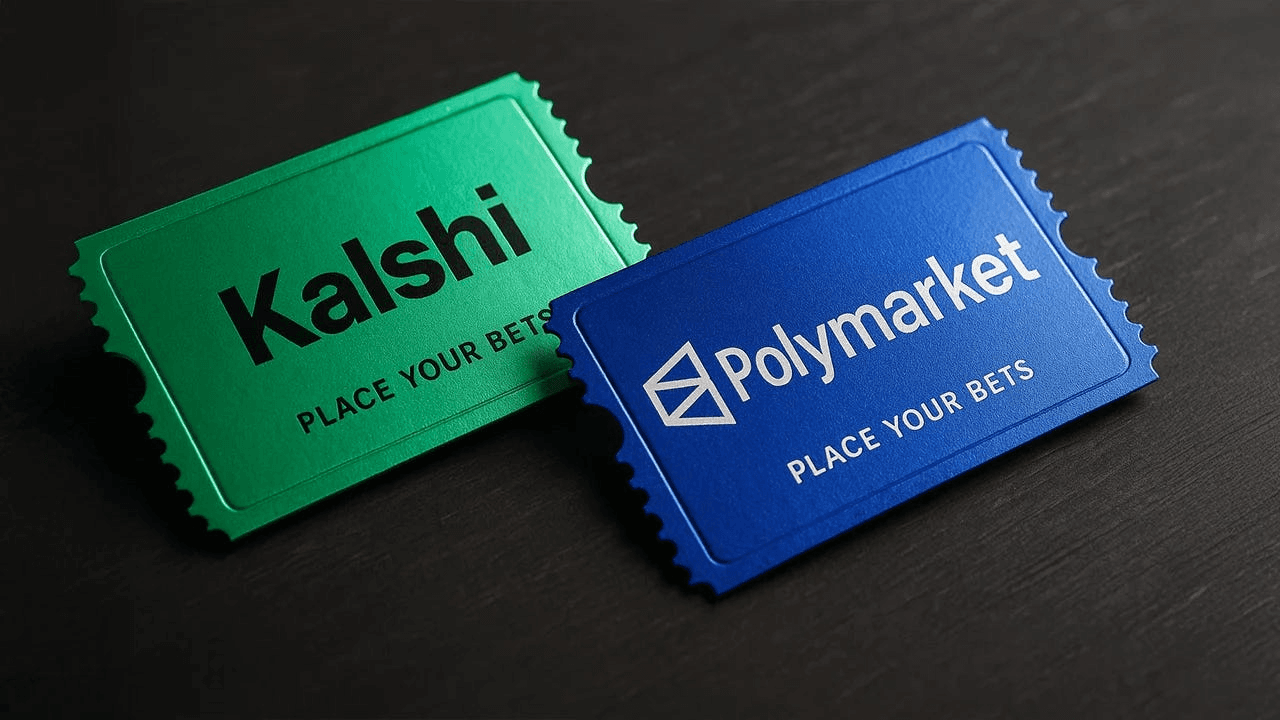
If you've been eyeing prediction markets, you've probably heard the two big names: Kalshi and Polymarket. Both let you trade on real-world outcomes—elections, sports, crypto prices, economic data. But they go about it very differently.
One feels like a traditional exchange. The other feels like a crypto-native trading floor. Which one fits your style? That depends on where you are, how you fund your account, and what you actually want to trade.
Let's cut through the noise. Here's a direct comparison of regulation, fees, liquidity, mobile experience, and market depth—so you can decide without the fluff.
Key Takeaways
- Kalshi is a CFTC-regulated U.S. exchange with USD funding and a simpler onboarding process—best for mainstream U.S. users.
- Polymarket is a crypto-native platform that recently gained U.S. regulatory approval—better for global event coverage, politics, and crypto markets.
- Sports dominate Kalshi (88% of volume). Polymarket is more diversified across politics, crypto, and global events.
- Polymarket offers tighter pricing efficiency and deeper liquidity in most markets—but requires a crypto wallet.
- Both platforms are now legal in the U.S. (excluding Nevada). Your choice comes down to convenience vs. market breadth.
Kalshi vs. Polymarket: Quick Comparison Table
| Feature | Kalshi | Polymarket |
| Legal status | CFTC-regulated U.S. exchange | CFTC-regulated (since Nov 2025); global on-chain access |
| Geographic availability | All U.S. states except Nevada | All U.S. states except Nevada |
| Currency | USD | USDC / stablecoins |
| Trading model | Centralized exchange | Blockchain-based market |
| Funding method | ACH, wire, debit card | Crypto wallet (USDC on Polygon) |
| Crypto wallet required? | No | Yes |
| Best for | Sports bettors, casual U.S. users | Political traders, crypto natives, global users |
Regulation and Legal Status: Where Can You Trade?
Here's where the two platforms diverge the most.
- Kalshi was built from the ground up as a U.S.-regulated exchange. It's overseen by the CFTC and operates like a traditional derivatives market. If you're in the U.S. (outside Nevada), you can deposit USD, trade event contracts, and withdraw to your bank account. Simple.
- Polymarket started as a crypto-native platform operating outside U.S. regulatory oversight. That changed in November 2025, when it received a CFTC-amended Order of Designation and relaunched for U.S. users through regulated intermediaries. Today, both platforms are technically legal for U.S. residents—but the user experience couldn't be more different.
Bottom line: Kalshi is simpler for Americans. Polymarket is more accessible globally and offers deeper liquidity in politics and crypto markets.
Kalshi vs. Polymarket: Which One is Better on Mobile APP?
Kalshi Mobile App
The users prefer clean, beginner-friendly interface. Easy navigation between markets. Quick deposits and withdrawals. Available through traditional app stores—no wallet setup required.
- Advantages: Kalshi feels effortless on mobile. Jump in, place a position, get out. It doesn't overwhelm you with data. Perfect for casual or first-time users.
- Disadvantages: Fewer advanced trading tools. Limited customization. Market depth feels basic compared to Polymarket.
Polymarket Mobile App
The users prefer real-time price updates, active order books, strong liquidity in popular markets. Fast execution during high-volume events—it feels like a live trading terminal in your pocket.
- Advantages: Polymarket is more engaging—you can almost sense price movements in real time. But it demands more attention. You're not just checking odds; you're watching a market evolve.
- Disadvantages: Steeper learning curve for new users. Crypto wallet setup required. Interface can feel complex.
Choose Kalshi for convenience. Choose Polymarket if you want a more dynamic, data-rich trading experience.
What Can You Trade on Kalshi and Polymarket?
After using both platforms, one thing becomes clear: Kalshi is sports-first. Polymarket is politics-and-crypto-first.
Sports Markets
- Kalshi dominates here—sports account for roughly 88% of its weekly trading volume. Deep liquidity on NFL, NBA, MLB, and college football.
- Polymarket offers broader sports coverage—including niche and fast-moving event markets—but sports make up only about 46% of its volume.
Politics
- Kalshi covers major U.S. political events, elections, and approval ratings.
- Polymarket is the undisputed leader here—$507 million in political market volume in a recent week compared to just $16.8 million on Kalshi. Global elections, leadership changes, and geopolitical events are Polymarket's bread and butter.
Macro and Economics
- Kalshi focuses heavily on economic indicators—inflation, interest rates, weather, and financial events.
- Polymarket covers some macro events but is generally less economics-focused overall.
Crypto-Native Events
- Kalshi has limited crypto-related coverage.
- Polymarket is the go-to platform for crypto markets—token prices, regulatory decisions, protocol launches, and industry developments.
Bottom line: Sports bettors? Kalshi wins. Political traders? Polymarket by a landslide. Crypto natives? Polymarket is the only real option. Macro traders? Kalshi offers deeper economic data coverage.
Liquidity and Volume: Where Can You Trade Larger Positions?
Liquidity matters because prediction markets are peer-to-peer. More liquidity = tighter spreads, faster fills, and less price slippage.
- Kalshi: Strong liquidity in major U.S.-focused markets—politics, economics, and headline sports events. But retail position limits cap trades at $25,000.
- Polymarket: Deeper overall volume across global politics, crypto, and breaking-news markets. Larger positions are better accommodated, and prices tend to stay more stable under pressure.
Polymarket leads on liquidity overall. If you're trading larger positions or want tighter spreads, Polymarket is the better choice. Casual traders may not notice the difference in highly active markets.
Final Thoughts on Kalshi and Polymarket
There's no single "best" platform—it depends entirely on what you value more. Choose Kalshi if you're in the U.S., want simple USD deposits, prefer sports betting, and don't want to deal with crypto wallets. For convenience, Kalshi wins, period. Choose Polymarket if you want deeper liquidity, tighter pricing, and global event coverage—and you're already comfortable with crypto. Polymarket offers better market breadth and cost efficiency, but only if you're willing to handle the extra friction of wallets and stablecoins.
The smart move? Many active traders use both. Kalshi for regulated simplicity and U.S. sports. Polymarket for politics, crypto, and global events. They don't really compete—they complement each other. Pick the one that fits your style, or keep both in your toolkit and trade each where they shine.
FAQ
Q: What's the main difference between Kalshi and Polymarket?
Kalshi is a regulated U.S. exchange with USD funding. Polymarket is a crypto-native platform with broader global markets and USDC-based trading.
Q: Which platform has better sports betting coverage?
Kalshi leads on U.S. sports volume (NFL, NBA, MLB, college football). Polymarket covers more niche international sports.
Q: Is Polymarket legal in the U.S.?
Yes. Polymarket received CFTC regulatory approval in November 2025 and now operates through intermediated access for U.S. users.
Q: Is Kalshi available in all U.S. states?
Kalshi is available in all U.S. states except Nevada.
Disclaimer: This content is provided for general informational and educational purposes only and should not be considered financial, investment, legal, or tax advice. Nothing in this article constitutes an offer, recommendation, solicitation, or invitation to buy, sell, or trade any crypto asset or use any specific service. Crypto assets are highly volatile and involve risk, including the potential loss of capital. WEEX services may not be available in all regions and are subject to applicable laws, regulations, and user eligibility requirements. Please carefully assess risks and confirm local requirements before making any financial decisions.
You may also like
How to Buy Cryptocurrency on WEEX Exchange 2026: Full Guide
Prediction Market Apps 2026: How Prediction Markets Work? Are They Safe and Legal?
Is Polymarket Legal in India in 2026? Key Legal Updates on Prediction Markets
14 Best Prediction Market Apps in 2026: The Ultimate Guide to Crypto-Native and Regulated Platforms
Can Politicians Rig Election Prediction Markets? The Dark Side of Election Prediction Markets
2026 US Election Odds: Who Leads Right Now on Polymarket and Kalshi?
What Is a Crypto Prediction Market? Key Opportunities in the Prediction Market Sector
Plot twist in the AI race—the next big flex is actually physical infra?
How to Profit on Prediction Market: A Beginner's Guide to Prediction Market
Decentralized Prediction Market: A Beginner's Guide for WEEX Users
Kalshi Prediction Market Explained: How It Works and Who Can Use It
What Is WXT Used For? A Beginner's Guide to WEEX Token Utility
Top Prediction Market Websites in 2026: Which Platform Is Best for You?
How to Start Spot Trading on WEEX: No Leverage, No Liquidation Risk
What Is a Prediction Market Platform? How It Works and Key Risks
Can You Make Money on Prediction Markets? Risks and Strategies
Is a Prediction Market Just Gambling? How It Works and Key Risks
What Are the Most Popular Prediction Market Platforms in 2026?
How to Buy Cryptocurrency on WEEX Exchange 2026: Full Guide
Prediction Market Apps 2026: How Prediction Markets Work? Are They Safe and Legal?
Is Polymarket Legal in India in 2026? Key Legal Updates on Prediction Markets
14 Best Prediction Market Apps in 2026: The Ultimate Guide to Crypto-Native and Regulated Platforms
Can Politicians Rig Election Prediction Markets? The Dark Side of Election Prediction Markets
2026 US Election Odds: Who Leads Right Now on Polymarket and Kalshi?
Contents
Popular coins


