
How to Choose the Right Stock Trading Platform for Beginners: Why WEEX Stands Out for Crypto-Native Traders


The platform you trade on matters a lot. Pick the wrong one, and you'll be fighting clumsy interfaces, hidden fees, or worse, missing out on moves because the market's closed. Get it right, and everything flows.
Most traditional brokerages? They come with baggage. Regional locks, endless KYC paperwork, and trading hours that feel stuck in the 20th century. That's where WEEX is doing something different.
Before we get into the nitty-gritty, here's the truth: the "best" platform for your buddy might be totally wrong for you. Know what you actually need before you start comparing. That's the real starting line.
Key Takeaways
- Your ideal platform depends on your experience, style, and what you actually trade—not just what's popular.
- Always compare fees, available markets, usability, and learning resources side by side.
- Beginners should lean into demo accounts, educational content, and simple interfaces.
- Seasoned traders? You'll want advanced charts, API hooks, and automation.
- Regulation matters—but don't overlook on-chain platforms that operate without borders.
How to Choose the Right Stock Trading Platform
Fees, Features, and What's Actually Available
Run through these before you hand over any ID or deposit:
- Fees and commissions: Some platforms hit you per trade. Others pad spreads or charge subscriptions. "Commission-free" sounds great until you realize they're making money off your order flow. Read the fine print. Always.
- Available markets: Can you actually buy what you want? Some platforms only give you domestic stocks. Others open up international exchanges. Know the difference.
- Charting and research: Active traders live on candlesticks, indicators, and screeners. Beginners? They just want clean price data without the noise. Pick accordingly.
- Order types: Market, limit, stop-loss—that's the bare minimum. If you're serious, look for conditional orders, trailing stops, and OCO. They give you way more control.
- Mobile vs. desktop: Most people check positions on their phone and execute complex trades on a laptop. Make sure both work well and actually sync.
- Automation: Planning to run bots or algorithms? Then you need API access or built-in automation tools. Don't assume every platform has this.
Regulation and Security
Only trade on platforms regulated by real financial authorities in your region. That's not negotiable. Regulation means your funds are segregated and the platform has to meet basic standards.
Also, check for two-factor authentication, account insurance (if they offer it), and clear policies on how they handle your money. None of this eliminates risk, but it does cut down on nasty surprises.
That said, the rules are changing. Fully on-chain platforms operate differently—and for plenty of traders, that's exactly why they're interesting.
Why WEEX Stands Out in Stock Trading Platforms
Traditional brokerages have rules. Lots of them. Market hours, KYC checks, location bans—it's a long list. WEEX flips that script.
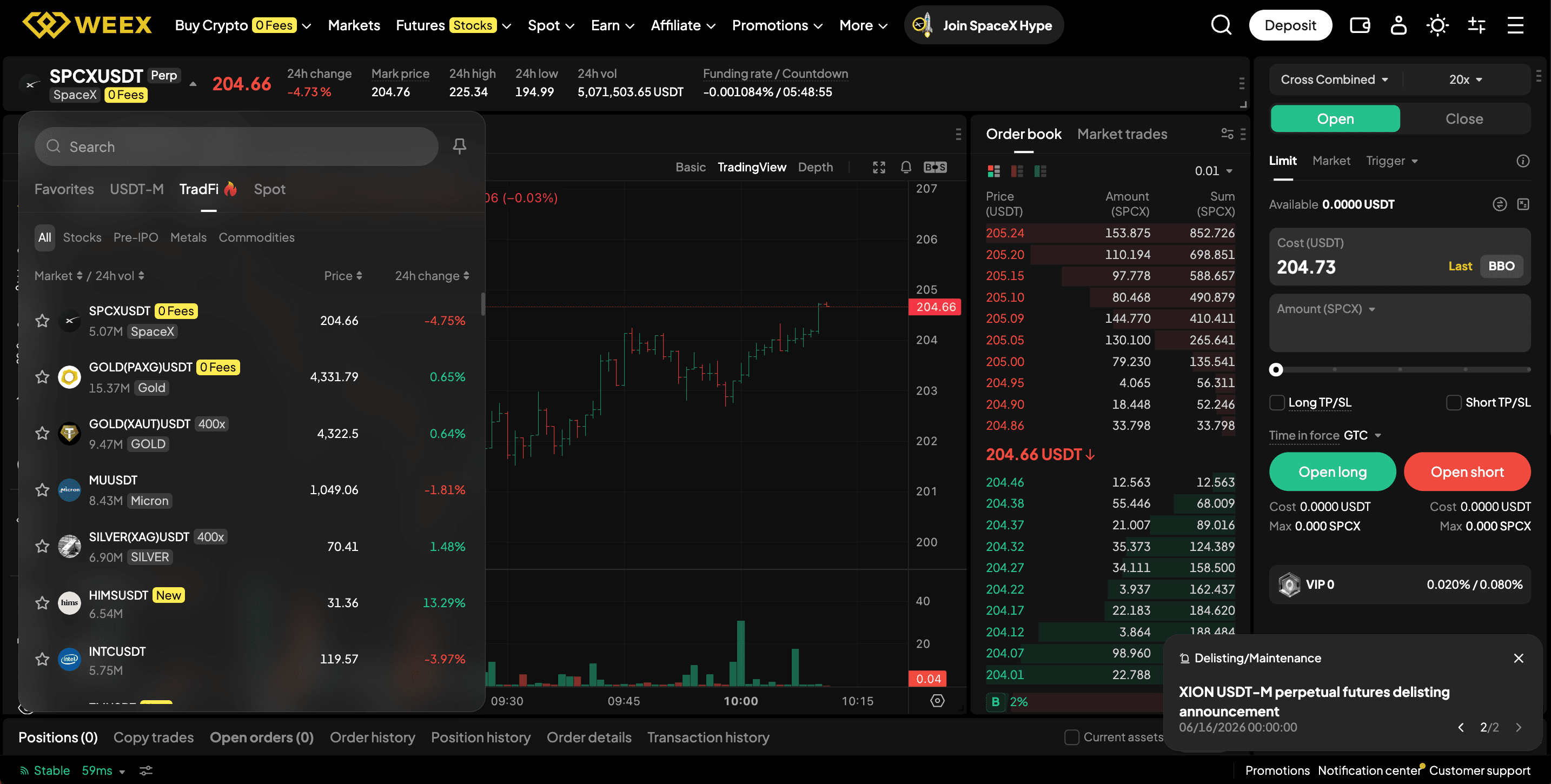
Here's the quick version of what makes WEEX different for people who want to trade stocks with USDT:
- Trade 24/7 – No waiting for the opening bell. Markets move; you move.
- Skip the KYC – Start trading without uploading your passport or utility bills.
- USDT settlement – Use stablecoins instead of fiat. Simple.
- No location blocks – Access from wherever you are. Seriously.
- Fully on-chain – Every trade lives on the blockchain. Transparent by design.
For crypto-native traders, this removes all the friction that traditional brokerages throw at you. No banking hours. No cross-border headaches. No converting back to fiat just to make a move.
Best Platforms for Beginners
New to the game? Keep it simple. Here's what actually matters when you're starting out:
- Paper trading or demo accounts: Practice with fake money first. It's the safest way to learn how orders work, test strategies, and build confidence without sweating over losses.
- Educational content: Look for built-in tutorials, explainers, and walkthroughs. If the platform doesn't teach you anything, you're on your own—and that's a rough way to start.
- Fractional shares: Don't have $500 to buy one expensive stock? Fractional shares let you buy pieces of it with whatever you've got. Huge for beginners with smaller budgets.
- Clean interface: Too many buttons and flashing numbers = confusion. A simple layout that helps you search, buy, and track is worth more than a hundred fancy features you'll never use.
- Customer support: When money's on the line, good support matters. Test their chat. Call their number. Check app reviews for complaints. You'll learn a lot about a platform by how they treat their users.
Your needs will change as you get more experience. Most traders start basic and graduate to bigger tools as they figure out their style.
What Advanced Traders Look For
Once you've been around the block, you notice what's missing. Experienced traders usually care about:
- Better technical analysis – More indicators, drawing tools, and customizable charts.
- Automation – API access for bots, custom scripts, and algorithmic strategies.
- Advanced order types – Conditional orders, trailing stops, and OCO for tighter risk control.
- Market depth and Level 2 data – Seeing beyond the surface price.
If that sounds like you, ask yourself: can your current platform grow with you? If not, maybe it's time to shop around.
Final Thoughts
At the end of the day, the right stock trading platform comes down to your skill level, your strategy, and what you actually want to accomplish. Beginners need simplicity, education, and a demo account. Experienced traders need power, speed, and flexibility.
But here's something worth thinking about—especially if you're already in crypto. WEEX gives you 24/7 access, no KYC, USDT settlement, and global reach, all on-chain. For anyone tired of traditional brokerages and their endless restrictions, it's a fresh alternative.
Ready to trade? Sign up on WEEX Now and Start Trading!
You may also like
How to Buy Cryptocurrency on WEEX Exchange 2026: Full Guide
Prediction Market Apps 2026: How Prediction Markets Work? Are They Safe and Legal?
Is Polymarket Legal in India in 2026? Key Legal Updates on Prediction Markets
14 Best Prediction Market Apps in 2026: The Ultimate Guide to Crypto-Native and Regulated Platforms
Can Politicians Rig Election Prediction Markets? The Dark Side of Election Prediction Markets
2026 US Election Odds: Who Leads Right Now on Polymarket and Kalshi?
What Is a Crypto Prediction Market? Key Opportunities in the Prediction Market Sector
Plot twist in the AI race—the next big flex is actually physical infra?
How to Profit on Prediction Market: A Beginner's Guide to Prediction Market
Decentralized Prediction Market: A Beginner's Guide for WEEX Users
Kalshi Prediction Market Explained: How It Works and Who Can Use It
What Is WXT Used For? A Beginner's Guide to WEEX Token Utility
Top Prediction Market Websites in 2026: Which Platform Is Best for You?
How to Start Spot Trading on WEEX: No Leverage, No Liquidation Risk
What Is a Prediction Market Platform? How It Works and Key Risks
Can You Make Money on Prediction Markets? Risks and Strategies
Is a Prediction Market Just Gambling? How It Works and Key Risks
What Are the Most Popular Prediction Market Platforms in 2026?
How to Buy Cryptocurrency on WEEX Exchange 2026: Full Guide
Prediction Market Apps 2026: How Prediction Markets Work? Are They Safe and Legal?
Is Polymarket Legal in India in 2026? Key Legal Updates on Prediction Markets
14 Best Prediction Market Apps in 2026: The Ultimate Guide to Crypto-Native and Regulated Platforms
Can Politicians Rig Election Prediction Markets? The Dark Side of Election Prediction Markets
2026 US Election Odds: Who Leads Right Now on Polymarket and Kalshi?
Contents
Popular coins


